So you want to buy a record in Oklahoma City. Where do you actually go?
The short answer is Guestroom Records on NE 2nd Street, in the Deep Deuce neighborhood just east of downtown. The longer answer involves a Saturday afternoon you did not plan on spending quite that way, a copy of something you forgot you loved, and roughly forty dollars more out of your pocket than you intended.
Guestroom has been around long enough to earn some credibility — the original location opened in Lawrence, Kansas, and the OKC outpost arrived in 2011. It has since moved a couple of times before landing in Deep Deuce, which suits it. The neighborhood has the right amount of foot traffic without being exhausting about it. Street parking is usually fine, which is a low bar but one that matters.
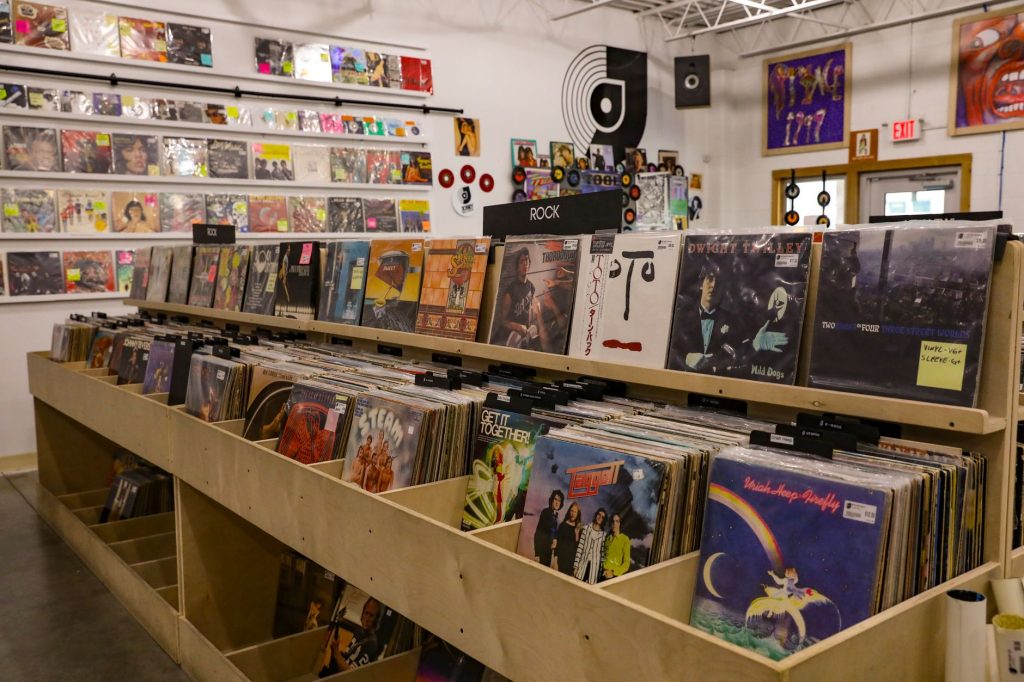
Inside, the shop runs maybe 2,500 square feet of organized chaos. New releases share wall space with used LPs filed by genre, and the genres themselves are sliced finely enough to be useful — they separate soul from funk, which not every shop bothers to do. The jazz section is deeper than you’d expect for a city this size. Country runs toward the genuine article rather than the crossover stuff. The used bins get picked over quickly on weekends, so if you are the type to spend forty-five minutes flipping through dollar records, Wednesday morning is a better move.
Staff recommendations are handwritten on index cards propped into the bins, and they read like actual opinions rather than marketing copy. Someone wrote “sounds like a roadhouse fire” on a Charley Patton reissue. That is not a corporate voice. The people behind the counter will talk to you if you want to talk, leave you alone if you don’t, and have opinions strong enough to be interesting without being insufferable about it. That balance is harder to maintain than it looks.
They carry a fair amount of local and regional music — Oklahoma artists, Texas artists, Kansas artists — which is the kind of thing a good independent shop does and a chain store never would. If you’re new to the city and want to understand what the music scene looks like geographically and historically, there’s probably no faster way than standing in that section for twenty minutes.
Prices on used vinyl are reasonable without being a screaming deal. New releases are priced like new releases everywhere, which is to say: more than you remember paying. Cassettes are back and apparently here to stay; there’s a small but earnest selection. Turntables and accessories are available if you need them, though nobody’s going to pressure you toward an equipment upgrade.
The shop hosts in-store performances occasionally — check their social media, because they don’t always broadcast far in advance. Record Store Day in April draws a line out the door, which is both a good sign and a reason to arrive early or just come back the following week when the dust settles.
If you are expecting a pristine boutique experience, adjust accordingly. This is a record store. It smells like a record store. The floor plan makes sense only after a few visits. That is entirely the point.