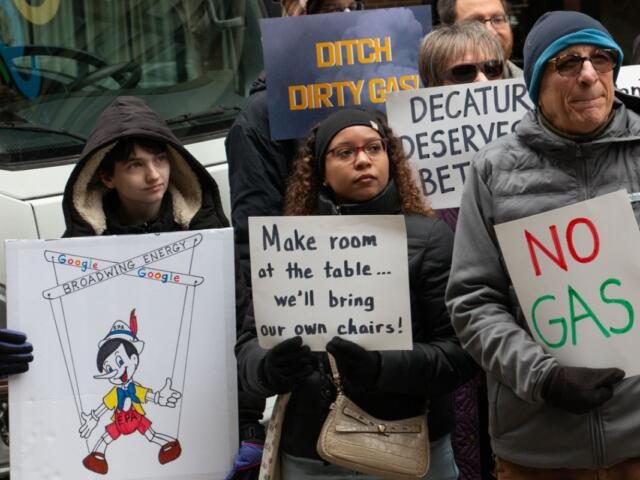
On Thursday, a group of Decatur residents and environmental advocates assembled outside Google’s Chicago headquarters to protest the company’s agreement with Broadwing Energy to power its data centers with electricity from a natural‑gas‑fired plant. The demonstrators called on Google to redirect its investment toward renewable energy and battery solutions that would benefit the local community.
Broadwing project and carbon‑capture plan
The Google‑Broadwing deal, announced in October, includes a major investment in carbon capture and sequestration (CCS) technology. The plan calls for trapping carbon‑dioxide emissions from the power plant and injecting the waste into an underground well operated by Archer‑Daniels‑Midland (ADM). If successful, the project could store more than two million tons of carbon waste per year by 2030.
ADM’s reputation in Decatur has been tarnished by past leaks at its CO₂ monitoring wells, which residents say violated the Safe Drinking Water Act. This history has fueled local skepticism about the new CCS effort.
Local demands for clean‑energy alternatives
Representatives from the coalition, including Kavi Chintam, campaign manager for the solar‑energy nonprofit Vote Solar, urged Google to fund renewable‑energy projects and to involve Decatur citizens in future discussions. Chintam highlighted the pending POWER Act, legislation that would regulate data‑center energy and water usage, increase transparency, and set stricter environmental reporting standards.
“How we require data centers to power their operations today will define this state’s climate legacy,” Chintam said. “Illinois can choose to cede its climate leadership to further the interests of the data‑center industry, or we can establish the strongest clean‑energy requirements in the nation.”
State policy context
The debate over natural‑gas‑powered data centers is central to the POWER Act’s negotiations. While the bill could require data centers to pay for new grid power, the source of that power—renewable versus fossil‑fuel—remains a key point of contention.
Governor J.B. Pritzker has indicated that emerging technologies like CCS might allow gas plants to stay online while meeting the state’s Climate and Equitable Jobs Act (CEJA) goals, which call for zero‑carbon power by 2045. However, critics argue that CCS has not yet been proven at utility scale in the United States and may serve as a distraction from a full transition to clean energy.
Water‑use and local concerns
Decatur’s 70,000 residents rely on Lake Decatur for drinking water. Residents expressed worries that the Broadwing project could threaten the lake’s water quality, especially after recent drought conditions forced water‑rationing measures.
Natural‑gas plants use an average of 2,803 gallons of water per megawatt‑hour, far less than coal plants but more than most renewable sources, which typically require little to no water for cooling.
Economic and workforce implications
Advocates suggested that a partnership with Richland Community College’s Clean Energy Job Hub could create local jobs in renewable‑energy installation and maintenance, aligning with CEJA’s workforce development goals.
Manley Mallard, a Decatur resident, warned that building a new gas plant next to ADM would increase fossil‑fuel pollution rather than provide clean‑energy opportunities for graduates of the state’s new workforce programs.
Google’s response and next steps
Google has not yet commented on the protest. The coalition delivered a letter to the company’s Chicago office requesting a response by Dec. 3. Google previously reaffirmed its commitment to run on 100 % carbon‑free power by 2030, a target set in 2020, and has positioned CCS as a component of that strategy.
While the CCS approach could represent a technical milestone for Google, local stakeholders remain unconvinced that it addresses the broader need for clean, renewable power and safeguards for drinking‑water resources.
Original reporting: Capitol City Now (WTAX 1240 Springfield) — read the source article.