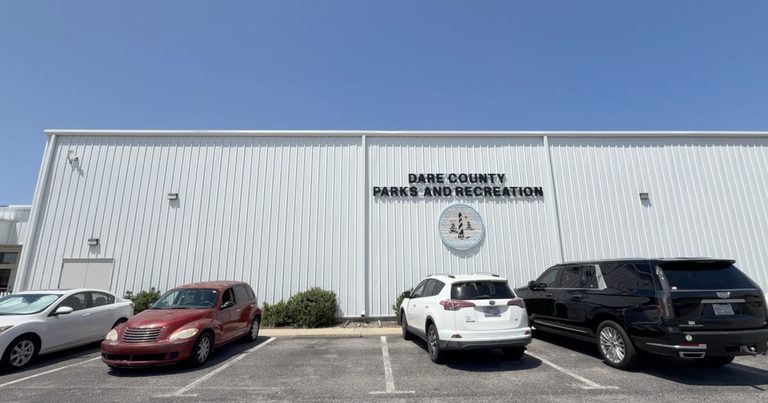
Dare County residents voted down a proposed quarter‑cent sales tax increase on Election Day, with over 60% rejecting the measure. The tax would have raised the county sales tax from 6.75% to 7.0% and was projected to generate more than $6 million each year.
Funding plan and expected projects
County leaders said the additional revenue would have been directed toward $56.9 million in priority parks and recreation projects. Those projects include installing synthetic turf at the Nags Head Soccer Complex, renovating the Lions Club Center and Fessenden Center, expanding the Youth Center, upgrading playgrounds, adding new splash pads, and other improvements across the northern beaches, Hatteras Island and Roanoke Island.
Officials react to the vote
“Absent something happening different, it’ll be decades before we could do all that,” said Dare County Manager Bobby Outten. Outten noted that the county does not currently have the funds to tackle the $60 million‑worth of projects in the short term.
Board of Commissioners Chairman Bob Woodard expressed disappointment, explaining that the county had planned to issue a 20‑year note to finance the projects if the referendum had passed. “We were committed to take a 20‑year note to be able to do that for Parks and Rec, and now we’re not able to do it. So, it’s very disappointing,” Woodard said.
Woodard added that the loan would have allowed the county to borrow the needed money and complete the list of projects within three years. “We had things planned for the northern beaches, Hatteras Island, Roanoke Island. This would have been really a home run for us,” he said.
Public sentiment and explanations
During interviews, some voters voiced frustration over any tax increase, while others admitted they did not fully understand what the money would fund. One resident who voted for the tax said she hopes the defeat does not permanently halt future park improvements.
Woodard defended the county’s outreach, stating, “We talked about it for months at every single one of our board meetings, we put out a flyer explaining what the money would go for, we had a plan that showed what the money would go for, we held three public meetings to say where it was going.”
Looking ahead
Outten acknowledged that the status quo will remain for now, and the county will continue to maintain existing facilities, though growth will be limited. “For now, the status quo will remain, and we’ll keep trying to keep and maintain things that we have, and it’ll be difficult to grow it very much into the future,” he said.
Woodard indicated that the board is unlikely to place the referendum on the ballot again in the near term. “I don’t think the board’s going to put this back on the table for a vote. I mean, the public clearly spoke. It was 60% against, 40% for, I don’t see them voting for it again. We’re just going to have to regroup and see if there’s anything we can do, a little piece at a time,” he explained.
Financial impact on residents
County officials previously estimated that roughly 70% of the tax revenue would come from tourists, meaning the average local resident would see an increase of about $14 per year.
The defeat of the tax measure leaves the future of the ambitious parks and recreation agenda uncertain, and county leaders will need to explore alternative financing options or phased approaches to address the community’s needs.
Original reporting: WTKR News 3 (Scripps) – local — read the source article.