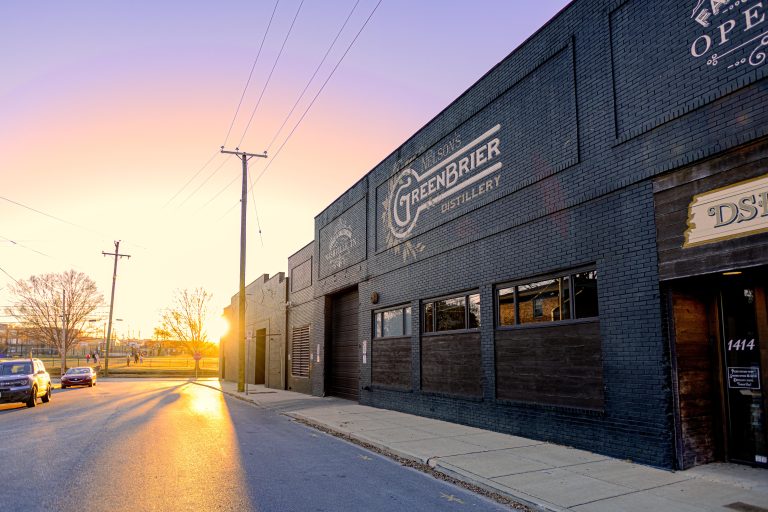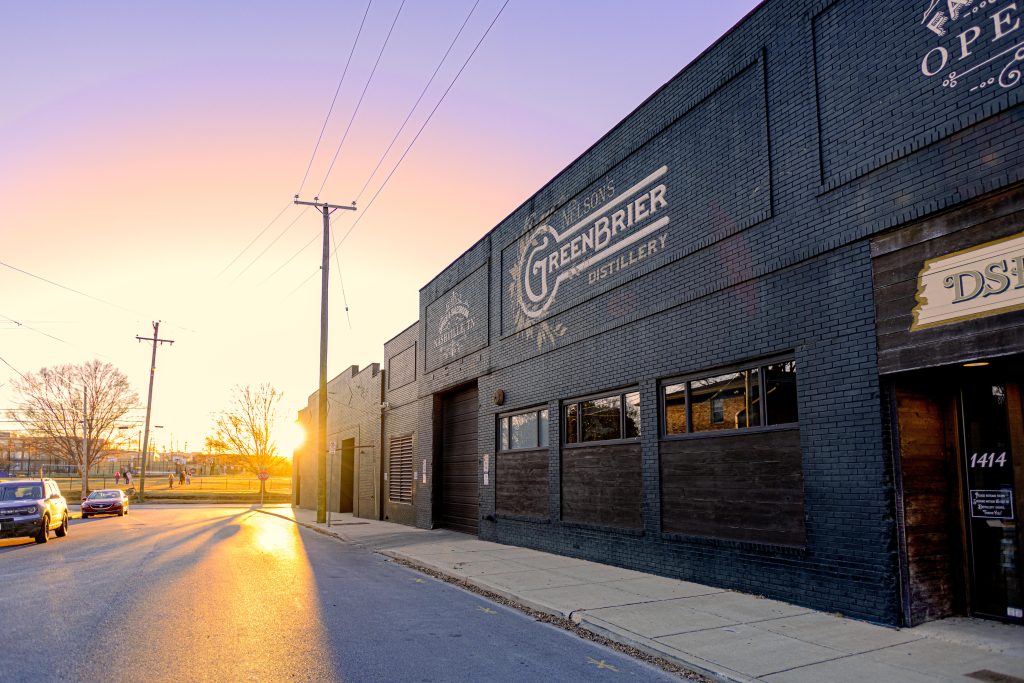
Nelson’s Green Brier Distillery on Rosa L. Parks Boulevard is one of the more unusual comeback stories in American whiskey. The original Green Brier Tennessee Whiskey was a commercial juggernaut before Prohibition wiped it out in 1909. Over a century later, two brothers — Charlie and Andy Nelson — found the original label in a Tennessee archive, traced it to their great-great-great-grandfather, and rebuilt the whole thing from scratch in Nashville. That lineage isn’t marketing copy. It’s genuinely part of what you’re tasting.
The building sits in a stretch of Marathon Village, a cluster of old factory and warehouse spaces that’s been slowly filling with studios, shops, and small businesses. When you pull up, it looks industrial in a good way — exposed brick, wide windows, the faint sweet smell of grain mash in the air if you get there mid-week when production is running. The tasting room inside is polished but not fussy: dark wood, good lighting, bottles lined up behind the bar like they mean it.
Go for the tour first if you haven’t been. It’s roughly $15 and runs about 45 minutes. You’ll walk the actual production floor, see the stills, and hear a guide explain the difference between Tennessee whiskey and bourbon in terms that actually stick. The Nelson brothers use a Lincoln County Process — filtering new spirit through sugar maple charcoal before aging — which smooths the whiskey in a way you can taste side by side with their unfiltered batches. That comparison alone is worth the admission.
The tasting flight is where you spend the real time. For around $20 you work through several expressions, usually including Belle Meade Bourbon (their flagship label, made here), the Green Brier Tennessee Whiskey itself, and whatever single barrel or limited release is open that month. The Belle Meade Bourbon has a high rye mash bill and a drier finish than a lot of its competition — not a sipper for everyone, but specific in a way that respects your palate. If you prefer something gentler, ask about the reserve or the honey variant. They’ll pour a small taste before you commit to anything.
Saturday afternoons get busy, especially in fall and spring when the Marathon Village courtyard fills up and people drift between the distillery, the coffee roasters, and the vintage shops nearby. If you want the room quieter and the guides less stretched, Thursday or Friday late afternoon is a better call. Parking is free in the lot and plentiful.
You can buy bottles to take home, and the selection in the gift shop goes beyond what you find at most state liquor stores — older vintages, single barrels selected by local retailers, and a few collaboration releases. Prices are fair given what’s in the glass: most bottles run $35 to $65, with some allocated releases climbing higher.
What keeps this place grounded is that the Nelsons actually show up. It’s not unusual to run into one of them on a weekend, talking through a barrel pick with a wholesale buyer or just chatting with visitors at the bar. That’s rarer than it should be in a business that’s grown this fast, and you notice it.