Work crews were still boxing up equipment on Saturday at the United Nations climate summit in Antalya, Turkey, as delegates pushed the two‑week conference into overtime. The extra day of talks came after the draft final agreement omitted any mention of fossil fuels, sparking sharp criticism from environmental NGOs and vulnerable nations.
Civil society warns of a disappointing summit
In a letter sent to co‑hosts Turkey and Australia, a coalition of 100 civil‑society groups warned that COP31 was “on course to preside over one of the most disappointing COPs” the United Nations has ever held. They urged organizers to act quickly, saying only a few hours remained to prevent the summit from becoming a low point in three decades of climate negotiations.
Experts call for drastic emissions cuts
Scientists and climate‑justice advocates stressed that averting the worst effects of global warming requires an urgent and drastic reduction in emissions from coal, oil and gas. The United Nations has warned that the world is likely to exceed the 2015 Paris Agreement target of limiting warming to 1.5°C above pre‑industrial levels.
“No one knows what is happening behind closed doors, or what the outcome of COP31 will be,” said Teresa Anderson, global lead on climate justice at ActionAid International.
Protests highlight frustration
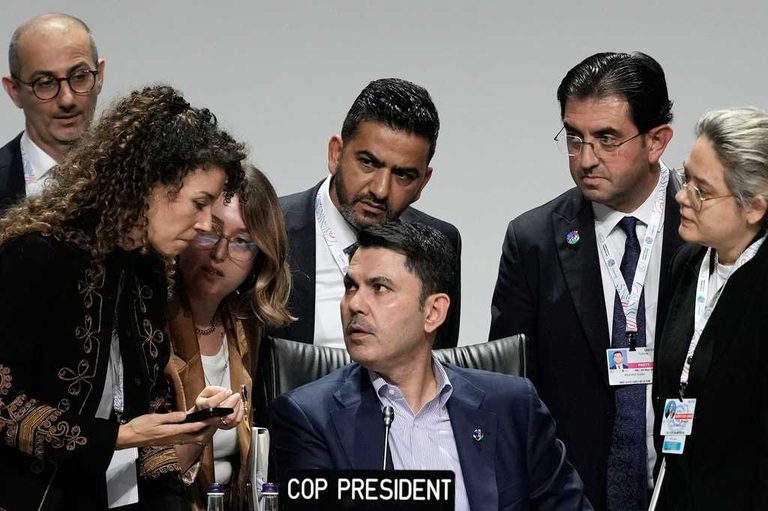
During the summit, a protester wearing a red noose and a vest that read “you are killing the future” climbed onto a table and shouted, “You take out fossil fuels. You killed 1.5. There is no money. Just kill me now.” Security escorted the demonstrator out while Turkey’s Minister of Environment and COP31 co‑president Murat Kurum urged attendees to maintain peace.
Harjeet Singh, a strategic adviser to the Fossil Fuel Treaty Initiative, noted that while the venue was nearly empty on the second day, all key negotiators remained present. He warned that many disagreements still linger and it was unclear how long the talks would continue.
Vulnerable nations demand more support
Representatives from small island states and other climate‑vulnerable countries called on wealthier nations, which bear historic responsibility for greenhouse‑gas emissions, to increase contributions to U.N. funds that help them adapt to rising seas and more severe weather events.
“Every year there seems to be greater discontent, mistrust and frustration for civil society, indigenous people and countries that are more climate vulnerable,” said Maina Talia, Tuvalu’s Minister of Environment, during a press conference. He added, “I am still holding the line, trying to be very optimistic until we see the text.”
U.S. position
The United States, the world’s largest economy and a major emitter, did not send a delegation to this year’s talks.
Looking ahead
The next United Nations climate summit is scheduled for November 2027 in Addis Ababa, Ethiopia, where organizers hope to secure a more concrete pathway to reduce reliance on coal, oil and gas.
Original reporting: KCCI Des Moines — read the source article.