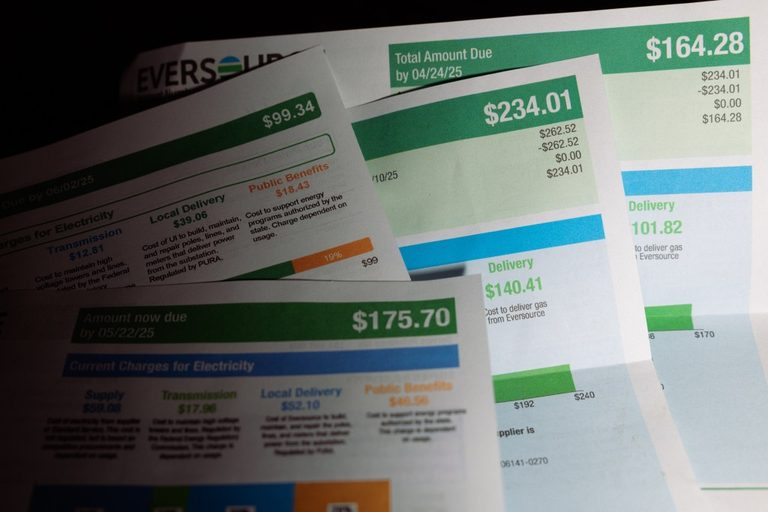
Connecticut residents could see their electricity bills rise sharply this winter as the state’s two largest utilities, Eversource and United Illuminating (UI), filed rate‑increase proposals with the Public Utilities Regulatory Authority (PURA) on Tuesday. Both companies are asking for roughly a 13% boost to standard service supply charges for the January 1–June 30 period.
Rate increase details
Eversource’s filing seeks to lift its supply charge from 11.58 cents per kilowatt‑hour to 14.93 cents. UI’s request moves its charge from 11.94 cents to 15.69 cents per kilowatt‑hour. For a typical residential customer, the changes translate to an estimated additional $23‑$26 per month.
In addition, Eversource is requesting a December adjustment to the public‑benefits charge that would add about $6 per month to the average bill. Actual impacts will vary by customer class and usage.
Why rates are climbing
Both utilities attribute the proposed hikes to “significant energy market volatility” caused by the war in Iran. The conflict has driven up prices for natural gas, the primary fuel for New England power plants, and for liquefied natural gas (LNG) shipments from the Middle East. During cold snaps, some regional generators also rely on oil, which has experienced parallel price spikes.
“We recognize that any increase in energy costs matters to our customers,” UI President and CEO Frank Reynolds said in a statement. “Standard Service supply costs are determined through Connecticut’s regulated procurement process and reflect the market cost of electricity purchased on customers’ behalf.”
Consumer options and market context
Connecticut’s deregulated electricity market allows customers to shop for power from third‑party suppliers instead of the standard utility rates. However, rising wholesale costs have also pressured these alternative providers. As of Wednesday, the lowest‑priced third‑party offer on the state’s competitive marketplace was 13.49 cents per kilowatt‑hour—still higher than current utility rates but lower than the proposed winter increases.
Industry observers note that two newly operational offshore wind farms—Revolution Wind and Vineyard Wind—should help offset some of the fuel‑price pressure. Dan Dolan, president of the New England Power Generators Association, said the wind projects are expected to perform best during the cold, blustery months when demand peaks, providing “significant consumer relief” if the winter proves milder than last year’s historic cold spell.
Regulatory review
PURA must review and approve any supply‑rate changes, though it has limited authority over supply charges, which by law must be passed through to customers without a profit margin. The agency will also consider Eversource’s separate request for an 18% increase—about $727 million—in base distribution rates beginning next summer, a proposal that remains pending.
Connecticut homeowners and renters should monitor upcoming PURA decisions and compare third‑party offers to determine the most affordable option for the coming winter months.
Original reporting: The Connecticut Mirror — read the source article.