New Britain, Conn. – Marisol Arroyo‑Castro, a veteran middle‑school social‑studies teacher with more than three decades of experience, is heading to the U.S. Court of Appeals for the Second Circuit to defend her right to display a crucifix in her classroom. Oral arguments are set for Dec. 7.
Background
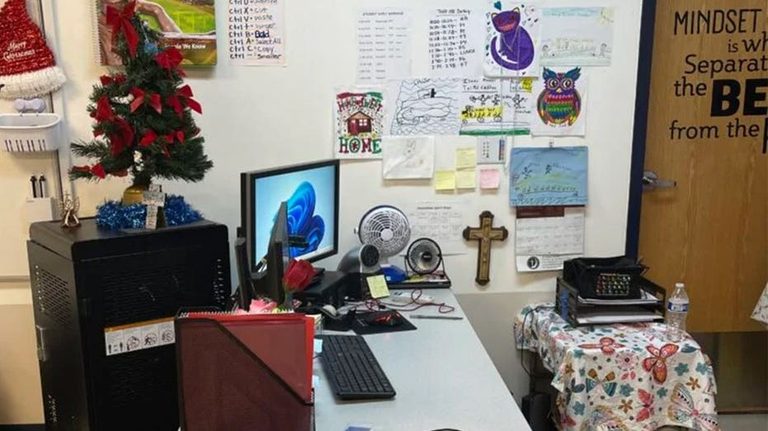
In December 2024, administrators at DiLoreto Elementary & Middle School ordered Arroyo‑Castro to remove a crucifix she had kept in a box near her desk for roughly ten years. The teacher said the small religious symbol provided personal comfort while she graded papers and prepared lessons.
When told the display was illegal and that she could return to teaching only if she left the crucifix behind, Arroyo‑Castro replied, “I can’t.” She was then escorted out of the school with the crucifix in a box.
School district response
The Consolidated School District of New Britain issued a formal reprimand for insubordination on Dec. 11, 2024, removed the crucifix the next day, and suspended the teacher for two days without pay. She was placed on paid administrative leave on Dec. 16, 2024, and reassigned to a non‑teaching role in March 2025.
District officials said the matter goes beyond a single religious symbol, citing a broader pattern of statements and actions that raised concerns about the treatment of students of differing religious backgrounds. The district emphasized its duty to maintain an inclusive environment for all faiths and claimed it offered multiple ways for Arroyo‑Castro to practice her faith without displaying the crucifix.
Legal fight
Arroyo‑Castro filed a federal lawsuit in January 2025, alleging violations of her First Amendment rights. A federal judge denied her request for a preliminary injunction in November 2025, finding the display likely constituted government speech.
Her attorneys, including senior counsel Becky Rees Dummermuth of the First Liberty Institute, argue that the crucifix is private speech protected by both the Free Exercise and Free Speech Clauses. They point to the Supreme Court’s Kennedy v. Bremerton School District decision, which affirmed a coach’s right to pray publicly, as precedent for teachers’ private religious expression.
“We will argue that Ms. Castro’s speech was private,” Dummermuth told Fox News Digital. “The Supreme Court made clear that a teacher’s private religious expression is allowable even if students can see it.”
What’s at stake
The case highlights a growing national debate over religious liberty in public schools. Supporters of the teacher argue that prohibiting a modest, personal religious symbol infringes on constitutional rights. Critics contend that public‑school classrooms must remain neutral to protect students of all faiths.
Local parents and community members have voiced strong opinions on both sides. Some see the district’s actions as necessary to uphold the Establishment Clause, while others view the removal as an overreach that silences a teacher’s faith.
Next steps
The Second Circuit will hear oral arguments in early December. The court’s decision could set an important precedent for how public‑school teachers across the country display personal religious items.
Regardless of the outcome, the case underscores the importance of protecting both religious freedom and the constitutional principle of government neutrality in public education.
Original reporting: Fox News (HLL/CB) — read the source article.