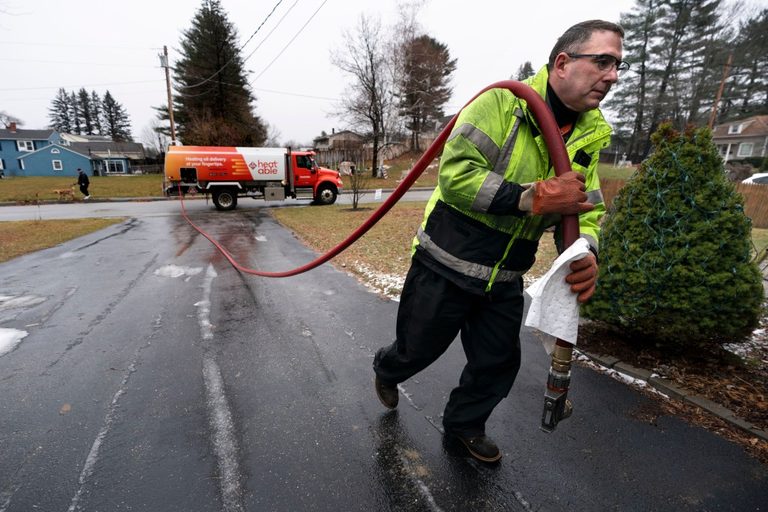
Connecticut families who rely on the state‑run Connecticut Energy Assistance Program (CEAP) to heat their homes this winter face a shrinking pool of fuel oil vendors. The program, which distributes federal LIHEAP funds to help more than 94,000 low‑income households, has seen vendor numbers drop from 325 in the 2016‑17 season to just 192 this year, according to the nonpartisan Office of Legislative Research.
Industry concerns over pricing and reimbursement
Chris Herb, president of the Connecticut Energy Marketers Association, warned that the program’s pricing structure is no longer sustainable. “Why shouldn’t we have a program that’s transparent? Why shouldn’t we have a program that’s fair?” Herb asked, adding that the price‑volatility risk has become intolerable for many distributors.
The core issue is the lag between the price a vendor pays a wholesaler for heating oil and the reimbursement rate the state provides. When oil prices spike—as they have since the U.S.–Iran conflict began—vendors can lose thousands of dollars on each delivery.
State response and recent reforms
Department of Social Services spokeswoman Christine Stuart said the administration has taken steps to address the problem, including a 15‑cent‑per‑gallon increase in reimbursement rates for this season and a commitment to pay vendors based on the actual date of delivery. “We always want to provide our residents with as much choice as possible in selecting vendors while staying within our budget,” Stuart explained.
Governor Ned Lamont’s administration also earmarked $12.7 million in state funds to allow additional rounds of assistance grants earlier in the heating season. The governor’s office estimates the state’s LIHEAP grant will be $86.3 million this year, a 5.6 percent increase over last season, while projected demand is up about 11 percent.
Vendor participation trends
Legislative changes in 2023 and 2024 that set county and regional pricing standards and mandated fair compensation briefly boosted vendor numbers, raising participation from 214 to 259 after the reforms took effect. However, the latest figures show a decline to 192 vendors, underscoring the ongoing challenge of keeping the program viable.
Katie Childs, vice president of Tuxis‑Ohrs Fuels in Meriden, said her company withdrew from the program five years ago after the pricing mechanism proved too unstable. “We will do that because that is what we do. We want people to be warm,” she said, noting that the February 2022 surge in oil prices—more than $2.50 per gallon in three months—made the financial risk untenable for many small and mid‑size distributors.
Impact on Connecticut families
Nora Duncan, vice chairwoman of the state’s Low‑Income Energy Water Advisory Board and director of the AARP Connecticut chapter, warned that without a reliable supply of vendors, vulnerable households could be left without heat this winter. “We can’t keep people warm with a program if they can’t get their fuel,” she said.
U.S. Rep. Rosa De Lauro (D‑3rd District), ranking member of the House Appropriations Committee, blamed the “president’s war of choice” for driving up energy costs and urged Congress to provide additional LIHEAP funding. While she framed the issue as non‑partisan, the ongoing vendor shortage highlights the need for state‑level solutions.
Looking ahead
State officials remain confident that the program will meet its statutory requirement to maintain an adequate supply of willing vendors, even as the total number remains lower than in previous years. Continued monitoring of pricing reforms and potential additional state funding will be critical to ensuring Connecticut’s low‑income families stay warm throughout the harsh winter months.
Original reporting: The Connecticut Mirror — read the source article.