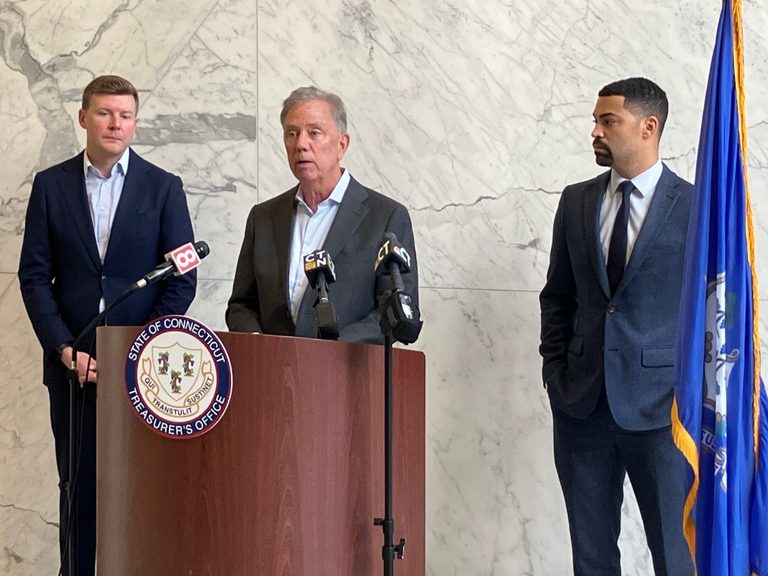
Connecticut’s fiscal leadership is celebrating a major win for taxpayers. Governor Ned Lamont told reporters Tuesday that the state’s habit of setting aside surplus cash for its pension systems has saved roughly $1 billion in the upcoming fiscal year, a figure that would have been much higher without the disciplined savings approach.
Surplus deposits curb pension debt growth
Since 2020, Connecticut has funneled about $11.5 billion of excess revenue into its two major public‑employee pension funds. By voluntarily adding to the required contributions, the state has prevented the mandatory pension payments from ballooning and siphoning money from other essential programs.
“Paying down our pension debt is one of the smartest investments we can make for Connecticut taxpayers,” Lamont said, emphasizing that the saved dollars can be redirected to services that families depend on, such as education and health care.
State officials praise disciplined fiscal management
State Treasurer Erick Russell echoed the governor’s optimism, noting that Connecticut’s recent financial turnaround demonstrates what “disciplined fiscal management and thoughtful, long‑term planning can accomplish.” Comptroller Sean Scanlon added that the momentum will help secure retirement benefits for teachers and public servants for generations.
Lamont’s administration estimates that the state will need to spend about $3.4 billion next year to meet pension obligations—a figure that represents roughly 12 % of the total budget, according to analysts. Without the surplus contributions, that cost would have been nearly $1 billion higher.
Debate over future surplus use
While the savings are being lauded, some Democratic lawmakers argue that the budget caps that forced large surpluses—averaging $1.9 billion annually over the past decade—have been too aggressive. Critics say the caps have taken money away from education, health care, social services and municipal aid.
During the pandemic, Connecticut supplemented its budget with more than $4 billion in federal emergency grants, allowing officials to backfill revenues that the caps had stripped. Those pandemic dollars are now exhausted, and legislative leaders are urging Governor Lamont to adjust the savings strategy to free up more resources for core programs.
Balancing pension security and program funding
Lamont, who describes himself as a fiscal moderate, cautioned against major changes to the caps. He noted that the pension funds already hold assets covering more than 65 % of long‑term costs, though the state still carries about $29 billion in unfunded obligations.
Republican Representative Joe Polletta of Watertown warned that the real threat could come from Democrats seeking to cut pension payments and redirect volatile revenue streams to other programs, potentially undermining the bipartisan reforms enacted in 2017.
Comptroller Scanlon, while supportive of modest cap adjustments to fund municipal aid and other priorities, praised the overall success of Connecticut’s savings efforts, calling the state’s financial turnaround a source of pride.
Looking ahead
Both Lamont and Scanlon said the next few years will focus on containing rising health‑care costs for the state and for Connecticut families and businesses. The administration aims to sustain economic growth while keeping the pension system secure for the teachers and public employees who earned their benefits.
As the budget cycle progresses, the balance between preserving pension health and meeting the immediate needs of Connecticut’s residents will remain a central theme of state fiscal discussions.
Original reporting: The Connecticut Mirror — read the source article.