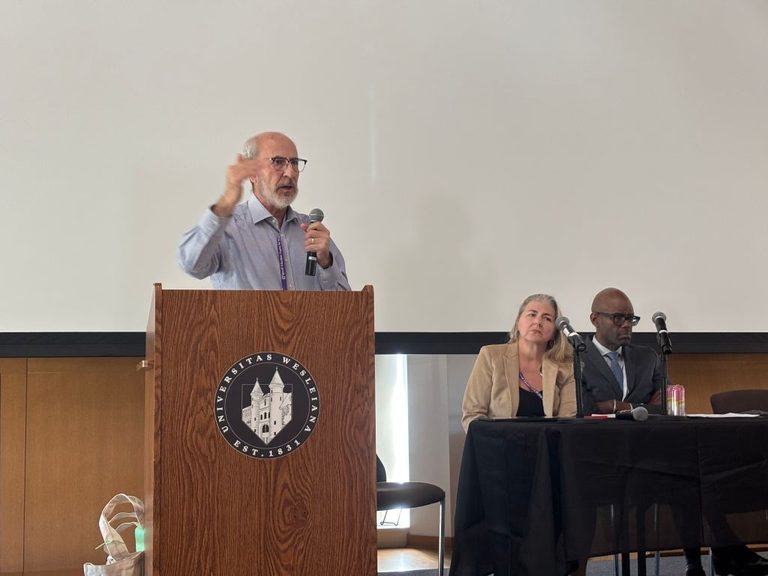
At Wesleyan University on Friday, the annual Special Education Equity for Kids conference drew a packed audience of parents, teachers, and advocates from across Connecticut. The event’s two keynote speakers – attorney Matt Cohen of Chicago and University of Connecticut professor Preston Green III – warned that the Federal Scholarship Tax Credit (FSTC), a Trump‑administration initiative, could threaten the quality of public special education.
Key concerns from special‑education leaders
“As public education goes, guess what? Special education goes, too,” Cohen told the crowd. Both speakers argued that the FSTC, which turns federal dollars into tax‑credit‑eligible scholarships for private‑school tuition and other educational expenses, may lead families to forfeit their rights under the Individuals with Disabilities Education Act (IDEA) when they enroll in private schools.
Green explained that private schools are not bound by IDEA requirements, meaning parents could lose a critical tool for holding schools accountable. “When they participate in these programs … they sign their rights away to IDEA,” he said.
Opposition from public‑school leaders and unions
Leaders of the Connecticut Association of Public School Superintendents and the state teachers’ unions echoed these concerns, citing a lack of oversight and the potential for increased inequality. They fear that the scholarships will primarily benefit affluent, nondisabled children, leaving public schools with a higher concentration of students with significant needs and reduced funding.
Cohen added, “They’re thrilled about this scholarship program. They’re being hoodwinked,” describing how many of his clients view the FSTC as an escape from a public system they feel has failed them.
Proponents see a different picture
Republican gubernatorial candidate Ryan Fazio praised the program as a “win‑win” for families seeking more educational options. Supporters argue that the credit, which allows individuals to claim up to $1,700 per scholarship, can be directed toward a range of services, including tutoring, field trips, and supplemental programs for students with disabilities.
Researchers at Georgetown University’s Edunomics Lab suggested that states could capture some of the credit’s value for public‑school students, potentially providing more than $1,000 per pupil for enrichment activities not covered by state mandates.
State decision pending
Governor Ned Lamont has not yet announced whether Connecticut will opt into the program. ConnCAN Executive Director Steven Hernandez urged the governor to consider the credit, noting that many Connecticut philanthropists are already poised to claim the tax credit and could direct funds toward local students.
“Leave no dollar behind,” Hernandez said, while acknowledging the complexity of how the money would flow. He highlighted the Future School Fund, founded by former Rhode Island Commissioner of Education Deborah Gist, as a model for trusted scholarship‑granting organizations.
What the Trump administration says
The Trump administration emphasizes that the FSTC expands parental choice and empowers families to tailor education to their children’s needs. Administration officials argue that the credit does not diminish federal education spending; rather, it redirects private donations to support individualized learning.
Critics, however, caution that without clear guidance from the IRS, scholarship‑granting organizations may struggle to ensure that funds are not used for services families are already entitled to under IDEA.
Next steps for Connecticut
As the debate continues, Connecticut’s Blue Ribbon Commission on K‑12 Education Funding and Accountability, which includes Hernandez, will keep the issue on the governor’s agenda. The commission plans to examine how the credit could affect enrollment trends, funding formulas, and the ability of public schools to meet the needs of high‑need students.
Stakeholders on both sides agree that the conversation about the Federal Scholarship Tax Credit is far from over, and the state’s decision will have lasting implications for families, schools, and the broader goal of educational equity.
Original reporting: The Connecticut Mirror — read the source article.