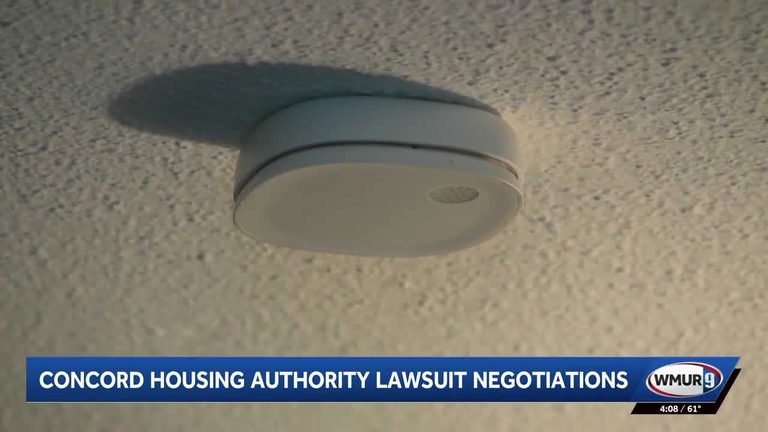
Settlement discussions are now under way in the lawsuit that accuses the Concord Housing Authority of placing electronic surveillance devices inside residents’ apartments. The parties filed a joint motion on Tuesday asking the court to pause the case until January 8, giving both sides time to negotiate a possible resolution.
Background of the case
The suit was originally filed in September by the American Civil Liberties Union of New Hampshire and New Hampshire Legal Assistance. Plaintiffs allege that the Authority installed ceiling‑mounted devices throughout its public housing properties that can monitor noise levels, detect motion and even capture signals from Apple devices such as iPhones and iPads.
According to the complaint, the technology is capable of collecting data that goes beyond the Authority’s stated goal of detecting excessive noise and smoking. The plaintiffs argue that this level of monitoring infringes on the state constitution’s guarantee of privacy and the fundamental right to live free from unwarranted government intrusion.
Authority’s response
The company that manufactures the devices, Mînut, told News 9 in September that the equipment is intended solely to identify excessive noise and smoking violations. Mînut said the sensors are not designed to record conversations or track personal electronic activity, but rather to help the Authority enforce health‑ and safety‑related rules.
Concord Housing Authority officials have not publicly commented on the settlement talks, but the pause in litigation suggests a willingness to explore a mutually acceptable outcome without further court involvement.
Legal and privacy implications
New Hampshire’s constitution protects citizens from unreasonable searches and seizures, a principle that has been invoked in prior cases involving surveillance technology in public spaces. If the devices are indeed capable of capturing personal data from residents’ smartphones, the lawsuit could set a precedent for how public housing agencies across the state deploy monitoring tools.
Legal experts note that any settlement would likely address how the Authority can continue to enforce noise and smoking policies while respecting residents’ privacy rights. Potential remedies could include removing the devices, limiting their functionality, or establishing stricter oversight mechanisms.
What’s next?
The court will reconvene on January 8 to determine whether the parties have reached an agreement or if the case will proceed to trial. In the meantime, residents of Concord’s public housing complexes are watching closely, concerned about both safety enforcement and personal privacy.
Both the ACLU of New Hampshire and New Hampshire Legal Assistance have emphasized that the outcome of this case could influence how other municipalities approach surveillance in public housing, making the settlement talks a matter of broader public interest.
Original reporting: WMUR (Hearst) – local news — read the source article.