In the wake of two recent ballot victories that restricted transgender participation in girls’ sports, Republican leaders in Colorado and Washington are charging Democratic officials with double standards. Voters in both states approved measures that bar students identified as biologically male from competing on girls’ teams, yet Democratic lawmakers are already discussing ways to overturn or amend those voter‑approved initiatives.
Colorado’s governor‑elect pushes for legislative review
Colorado voters approved three measures in November: higher penalties for fentanyl offenses, a ban on transgender athletes competing in sports designated for the opposite biological sex, and a prohibition on gender‑related surgeries for minors. The sports restriction passed with a clear majority, marking a rare Republican win in a traditionally blue state.
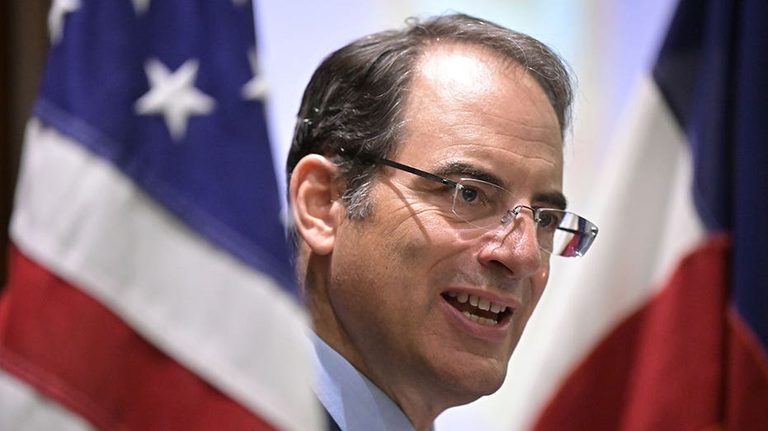
At his first post‑election news conference, Colorado governor‑elect Philip Weiser suggested that the state’s Democratic‑controlled legislature could revisit the sports measure, calling it “statutory … and a natural and appropriate role for the legislature to say ‘what are the adjustments that need to be added.’” Weiser warned that requiring full‑body examinations of student‑athletes would be an invasion of privacy.
Republicans in suburban Denver quickly labeled Weiser’s comments a dismissal of the voters’ will. The Adams County Republican Party issued a statement calling the governor‑elect’s stance a “suggestion” rather than a respect for the democratic process, invoking the “No Kings” protest movement that Weiser has previously supported.
Washington’s Rep. Pramila Jayapal joins the criticism
In Washington State, Initiative 638 – which prohibits students defined as “biologically male” from competing on girls’ K‑12 sports teams and requires verification of biological sex from a health‑care provider – passed with roughly 56% support. Rep. Pramila Jayapal, D‑Washington, condemned the measure and pledged to “take our state back,” saying Democrats would work to overturn the “bad initiatives” and restore gender‑inclusivity.
Jayapal’s comments have drawn criticism from opponents who point to her past involvement with the “No Kings” protests, a movement that has criticized President Donald Trump for perceived authoritarian actions. Critics highlighted a November 2025 social‑media post in which Jayapal wrote, “We have democracy for a reason. America doesn’t belong to kings; it belongs to the people and we’re going to keep it that way.”
Legal context and next steps
Washington’s constitution allows the legislature to amend a voter‑approved initiative after two years with a two‑thirds vote in each chamber, or with a simple majority after that period. Colorado’s legal framework is similar, permitting legislative amendment after the first two‑year protection window.
Both states’ Democratic leaders argue that the measures, while reflecting voter sentiment, may conflict with broader principles of gender inclusivity and could face constitutional challenges. The Colorado House Republican caucus responded by urging Democrats who champion “No Kings” to apply the same principle to their own policies.
What this means for local families
For parents and students in Colorado and Washington, the debate centers on the balance between respecting voter decisions and protecting the rights of transgender youth. Supporters of the measures argue they preserve fairness in girls’ athletics, while opponents contend the bans discriminate against transgender students and undermine decades of progress toward gender inclusivity.
Local school districts are preparing for potential legal challenges and possible legislative revisions. Community groups on both sides are mobilizing, emphasizing the importance of parental involvement and faith‑based perspectives in shaping future policy.
Original reporting: Fox News (HLL/CB) — read the source article.