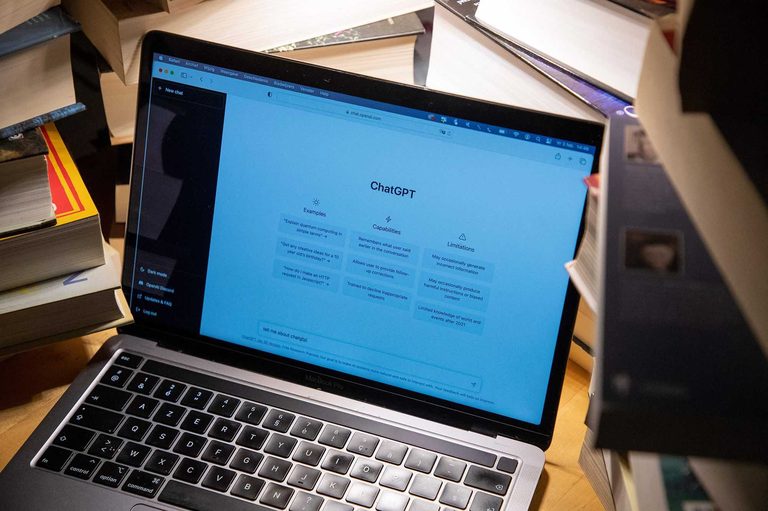
College admissions offices nationwide are racing to establish policies on the use of artificial‑intelligence (AI) tools in application essays. As the Jan. 1 Common Application deadline approaches, a growing number of high‑school seniors are drafting essays with the help of chatbots such as ChatGPT, prompting schools to consider both how to detect AI‑generated content and whether to employ AI themselves to evaluate the flood of submissions.
Admissions offices feel the pressure
Kate Gilbertson, a former UC Berkeley graduate who now edits college applications full‑time, says she is receiving drafts that lack the typical quirks of teenage writing. “Those little moments of flaw tell me that this is still a 17‑year‑old’s writing, right?” she explained.
At the California Institute of Technology, dean of undergraduate admissions Ashley Pallie acknowledges that “students are moving faster than admissions offices” when it comes to AI. Caltech has taken a nuanced stance: while it discourages students from replacing their own voice with AI‑generated content, it permits the use of AI to generate brainstorming questions or exercises.
Universities adopt varied approaches
Other institutions are issuing their own warnings. The University of Pennsylvania cautions against AI‑assisted letters of recommendation written by counselors or teachers. Major public schools such as Virginia Tech, which received a record 57,622 first‑year applications for 2025, are testing AI tools to keep up with the volume.
Not every experiment has succeeded. The University of North Carolina‑Chapel Hill recently reversed a plan to auto‑score essays, citing concerns that widespread AI‑assisted writing diminished the usefulness of AI essay ratings.
Some schools are dropping supplemental essays
In response to the AI surge, several colleges are eliminating supplemental essays altogether for this cycle. Tulane University announced it will no longer require a “Why Tulane?” essay, with spokesperson Michael Strecker noting that while the essay has become less important, concerns about AI did influence the decision.
AI as a leveling tool
Proponents argue that AI can help families who cannot afford costly private college consultants. Michael Koppenheffer, chief innovation officer of enrollment solutions at EAB, told CNN that AI serves as a “college counselor they can’t afford,” providing detailed guidance that many students would otherwise lack.
An EAB survey found that 82 % of students who responded said they used ChatGPT during their college search, and many reported that AI helped them compare costs, financial‑aid prospects, and campus life factors such as football programs or Greek life.
For parents like Bunmi Emenanjo, AI simplifies the research process. Her 17‑year‑old daughter uses Claude to generate a spreadsheet of potential schools that meet specific criteria—urban setting, merit aid, and diverse student body—while the essay portion remains a traditional, human‑written effort.
Industry voices on the future of the essay
College‑consulting founder Sophie Sajnani, who graduated in 2025, discourages students from letting AI write their essays but sees value in using AI for brainstorming. She noted a spike in enrollment for her firm’s AI‑literacy program, emphasizing that the essay still serves to showcase personal growth rather than pure writing skill.
“In our ideal world, everyone would do an interview of some sort,” Pallie said, adding that any interview should remain human‑focused.
While the debate continues, the consensus among admissions leaders is clear: AI will remain a tool—both a challenge and an opportunity—for colleges striving to assess applicants fairly while preserving the authenticity of each student’s voice.
Original reporting: WPBF (Treasure Coast / Hearst) — read the source article.