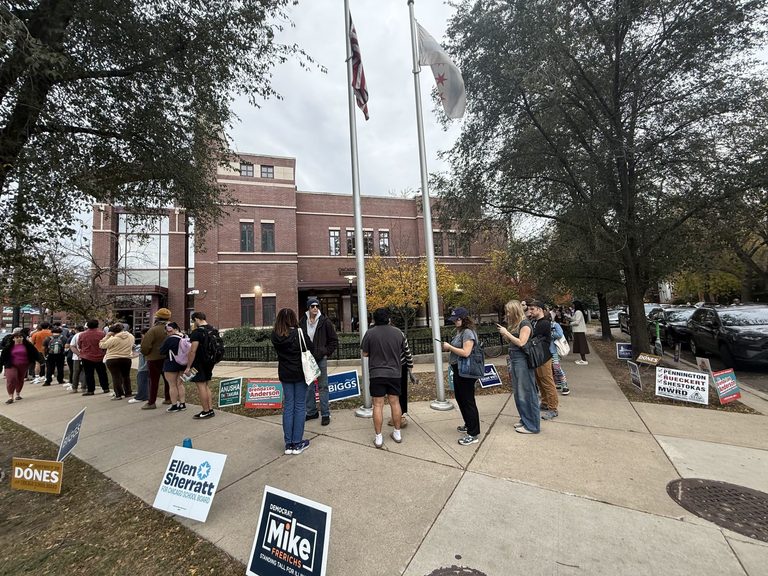
Chicago voters experienced unusually long waits on Tuesday after a coding error in the Chicago Board of Elections’ system for calculating ballot quantities left some split precincts with too few ballots of certain styles. The mistake caused shortages at polling places in the 1st, 25th and 32nd wards, including sites in Uptown, Pilsen, Logan Square, Albany Park and the Near West Side.
What went wrong
According to Julie Metea, spokesperson for the elections board, the error transposed the quantities of different ballot styles. While the total number of ballots sent to each precinct was correct, the distribution of specific styles was off, resulting in an oversupply of one style and a shortage of another in the affected precincts.
Chicago has 491 split precincts out of 1,291 total precincts, meaning voters in those areas receive different ballot designs depending on the election districts they reside in. The coding glitch primarily impacted these split precincts.
Impact on voters
Residents reported waiting hours to cast their votes. Owen Wiley, a voter in the 5th precinct of the 1st Ward, arrived at Goethe Elementary School in Logan Square at 11:30 a.m. only to be told the precinct had run out of paper ballots. After being redirected to other sites and returning later in the day, he finally cast his ballot at 7:05 p.m.
Jane Ruby, president of the League of Women Voters of Chicago, observed similar shortages at the same location. She noted that the board delivered an additional 100 ballots around noon, but those were exhausted within a couple of hours, and the next delivery did not arrive until 7:05 p.m.
Board response
The elections board began printing and delivering extra ballots as soon as the problem was identified around 10 a.m. on Tuesday. An additional electronic voting machine was also provided to affected sites, and polling places were kept open late to ensure every voter in line could vote.
In response to the incident, the board’s IT department has implemented automated validation checks and other safeguards designed to catch similar errors before ballot quantities are sent to the printing vendor for future elections. Metea said this was the first time the board had experienced this type of error.
Mayor’s office comments
Mayor Brandon Johnson’s spokesperson called the reports of ballot shortages “concerning” and said the administration “takes those concerns seriously.” The statement emphasized that every Chicagoan deserves the opportunity to vote without unnecessary barriers and highlighted the mayor’s support for the Fair Access to Democracy Ordinance, which created an advisory council to identify voting barriers and recommend improvements.
Residents who experienced disruptions are encouraged to attend or submit written comments for the advisory council’s first meeting on November 20.
Looking ahead
The board has not yet determined the exact number of precincts that ran out of one or more ballot styles, and the investigation remains ongoing. League of Women Voters officials hope to work with the board on better procedures before the municipal election in February, noting that high‑turnout elections will continue to test the system.
Illinois election law requires election authorities to deliver at least 10 percent more ballots than the number of registered voters at each precinct, and to do so at least 12 hours before polls open, with additional supplies kept on hand at the board’s offices. The recent glitch underscores the importance of robust technical safeguards to uphold these statutory requirements and ensure smooth voting experiences for Chicago’s citizens.
Original reporting: Block Club Chicago — read the source article.