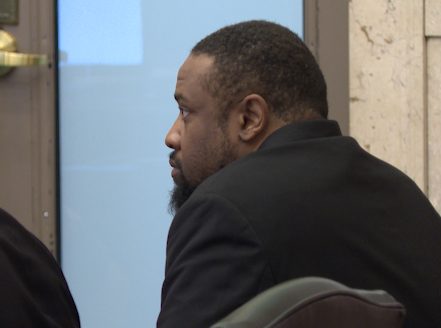
The courtroom in Hamilton County saw the last witness testify in the murder trial of Rodney Hinton Jr., with closing arguments slated for Tuesday. The state’s final rebuttal witness, psychologist Dr. Jennifer O’Donnell, spent much of the day explaining Hinton’s mental state and addressing his not‑guilty‑by‑reason‑of‑insanity plea.
Psychologist’s assessment
Dr. O’Donnell, who evaluated Hinton on three occasions, said the psychologists who examined him agree he suffers from a serious mental illness. The key legal question, she explained, is whether that illness prevented Hinton from understanding that his conduct was wrong.
“In my opinion, Mr. Hinton knew the wrongfulness of the act,” O’Donnell testified. She added that she found no evidence of acute psychosis or delusional thinking when Hinton drove toward Deputy Henderson.
According to O’Donnell, Hinton described himself as angry and in “extreme emotional pain” after his son’s death. While acknowledging the depth of his grief, she emphasized that emotional pain does not automatically equate to psychosis.
“You can be in extreme emotional pain, physical pain. That does not equate to psychosis,” O’Donnell said.
She also pointed to video evidence showing Hinton’s behavior before the crash. The footage, she noted, showed nothing unusual as he entered his car and that he obeyed traffic laws until he crossed the yellow line.
“That’s really the important piece, that there’s no evidence of any wrongful behavior until that moment,” she said.
Defense challenges
During cross‑examination, defense attorney Clyde Bennett questioned O’Donnell about gaps in her information. She admitted she had not interviewed two individuals who were with Hinton after he viewed a video related to his son’s death, acknowledging that their testimony could have been valuable, though she stopped short of calling it critical.
Bennett highlighted differences among the psychologists who evaluated Hinton, arguing that the inconsistencies undermined the prosecution’s case.
“Because it shows they’re not on the same page, and there’s inconsistencies,” Bennett said. “Psychological opinions are not two plus two is four.”
He also pressed on Hinton’s history of suicidal thoughts, asking whether suicide might have motivated the crash.
“You don’t know if suicide was a reason for crashing into the pole—you don’t know that, do you?” Bennett asked.
O’Donnell responded that Hinton never identified suicide as his motive.
Final opinion
Despite the defense’s probing, Dr. O’Donnell maintained her ultimate conclusion: Hinton was experiencing grief, anger, and a serious mental illness, but he still knew his actions were wrong.
With both sides having presented their witnesses, the trial now moves toward closing arguments on Tuesday, after which the jury will begin deliberations.
Original reporting: WLWT Cincinnati — read the source article.