There is a version of Lake Shasta that most visitors never see. They pull into one of the marinas off Interstate 5, rent a jet ski, and spend the afternoon bouncing across the main channel in a haze of exhaust and sunscreen. That version is fine. This version is better.
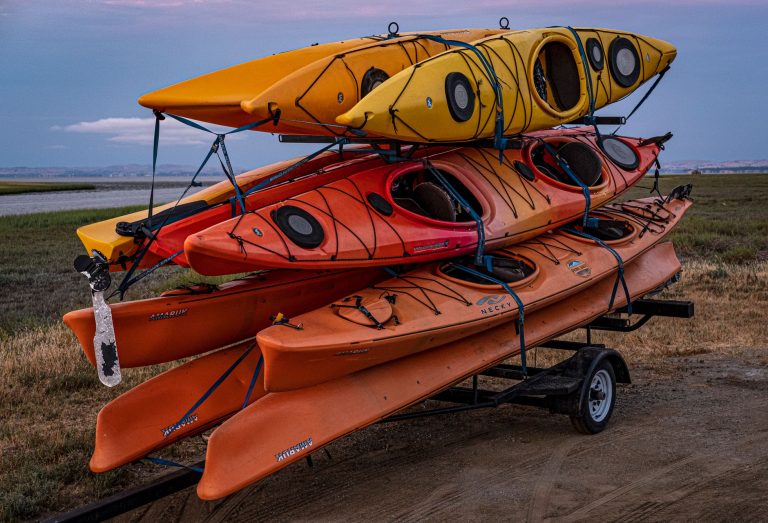
Skunk Point is a narrow, forested cove tucked into the eastern arm of Lake Shasta, accessible primarily by water — which means you earn it. Most people who get there arrive by kayak or paddleboard, launching from the Bailey Cove Boat Ramp area off Shasta Caverns Road in the O’Brien community, about twenty minutes northeast of downtown Redding. The paddle out is easy enough for beginners — a mile or so of calm, sheltered water — and the payoff is extraordinary.
The first thing you notice when you round the last bend into the cove is the quiet. The main lake noise — motors, music, the distant whine of personal watercraft — falls away almost completely. What replaces it is the sound of water lapping against rust-orange limestone bluffs, the occasional osprey calling overhead, and, if the wind is low, almost nothing at all. It feels like a different lake entirely.
The bluffs here are dramatic and close. Lake Shasta’s water levels fluctuate significantly with the seasons, and that dramatic rise-and-fall exposes a bathtub ring of pale stone around the cove that, by late summer, becomes an accessible limestone shelf — wide enough to pull out your kayak, spread a towel, and spend a long, lazy afternoon reading or watching swallows dart in and out of crevices in the rock face. The water below is extraordinarily clear in the upper arms of the lake, with a blue-green tint in deep channels that photographs almost impossibly well.
Wildlife sightings are common and unhurried here. Bald eagles nest in the tall ponderosa pines that line the ridge above the cove, and in early morning you have a reasonable chance of watching one work the water’s surface while you eat your breakfast from the bow of your kayak. Great blue herons stand motionless in the shallows. Mule deer sometimes pick their way down to the water’s edge at dusk. In spring, the hillsides above the cove are studded with lupine and Indian paintbrush, and the whole place smells of pine and warm rock.
The practical details are straightforward. Bailey Cove Boat Ramp has a modest day-use fee and is managed by the Shasta-Trinity National Forest. Bring everything you need — there are no services once you’re on the water. A dry bag for your valuables, a personal flotation device, plenty of water, and some sunscreen are non-negotiable. The sun bounces hard off the lake surface at midday, and you will feel it. An early start — on the water by seven or eight in the morning — rewards you with glassy conditions, cooler air, and the lake mostly to yourself before the powerboats arrive.
If you do not own a kayak, several outfitters in the Redding area rent sit-on-top models that are perfectly suited to this kind of calm-water exploration. Call ahead in summer; weekends book quickly. A half-day rental is usually sufficient for the trip to Skunk Point and back, with a couple of hours to linger in the cove itself.
What makes Skunk Point feel genuinely special, beyond the scenery, is how it reframes your idea of what Lake Shasta is. This is not a reservoir engineered for recreation, though it serves that purpose well. It is a landscape of real geological drama and quiet biological richness, and Skunk Point lets you sit inside that reality for a few hours without distraction. You paddle in under your own power, you earn the silence, and you leave having seen something most of your friends who have visited Redding a dozen times have never encountered.
That, more than the limestone bluffs or the ospreys or the improbably blue water, is the thing worth telling people about.