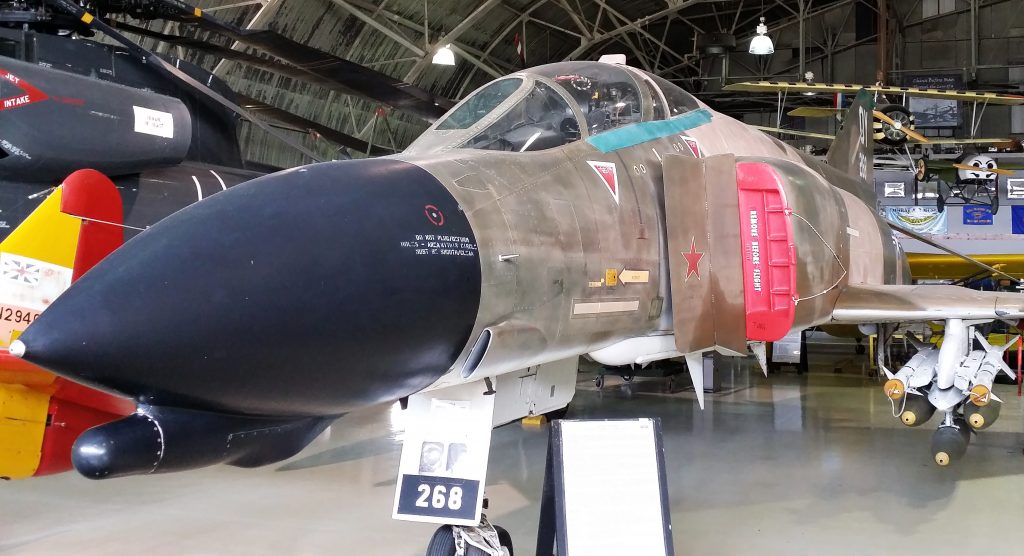
There is a particular feeling you get when you walk up to a full-scale B-47 Stratojet and realize the thing is enormous — not textbook enormous, but actually, physically, overwhelmingly enormous. That moment happened to me on a Tuesday morning at the Kansas Air National Guard Museum, tucked onto the grounds near McConnell Air Force Base on the southeastern edge of Wichita, and I have not stopped thinking about it since.
Wichita calls itself the Air Capital of the World, and that title is not idle boasting. Boeing, Cessna, Beechcraft, Spirit AeroSystems — the city has been building, testing, and launching aircraft for well over a century. It makes sense, then, that the region’s military aviation history would be preserved with genuine care and local pride. The Kansas Air National Guard Museum does exactly that, and it does it without the sterile, stand-behind-the-rope formality you might expect. This place has personality.
The outdoor static display is the heart of the experience. Rows of aircraft span decades of American military aviation — from Korean War-era jets to Cold War giants to more recent tactical aircraft. You can walk right up to most of them, study the rivets, peer into cockpits, and let the scale of these machines recalibrate your sense of what human engineering can accomplish. Kids go absolutely quiet in the best way possible. Adults start using phrases like ‘can you imagine flying that thing.’
Inside the museum building, the exhibits connect the hardware to the people. Uniforms, flight gear, photographs, mission logs, and personal effects from Kansas airmen and airwomen bring the history into human focus. There is something moving about seeing a leather flight jacket from a pilot who trained right here in south-central Kansas and went on to serve overseas. The museum staff — many of them veterans or active-duty connected — are genuinely enthusiastic about answering questions and sharing stories that never made it into any official account.
Admission is free, which still surprises me, because the collection is substantial and the grounds are well-maintained. Plan to spend at least an hour and a half, more if you have curious kids or an aviation-inclined travel companion. Weekday mornings tend to be quieter, which means more time to linger near the aircraft without crowds. Comfortable shoes matter here — the outdoor grounds cover real ground.
Getting there is straightforward. The museum sits near the intersection of Rock Road and the base perimeter on the city’s south side, not far from highway access. It is a bit off the tourist trail compared to some of Wichita’s downtown attractions, and that is precisely what makes it worth the short drive. You will not be jostling for position with tour buses.
Wichita has a way of surprising visitors who assume a mid-sized Kansas city means a thin cultural calendar. The Kansas Air National Guard Museum is one of the better arguments against that assumption — specific, authentic, and genuinely impressive in the way that only real artifacts and real history can be.