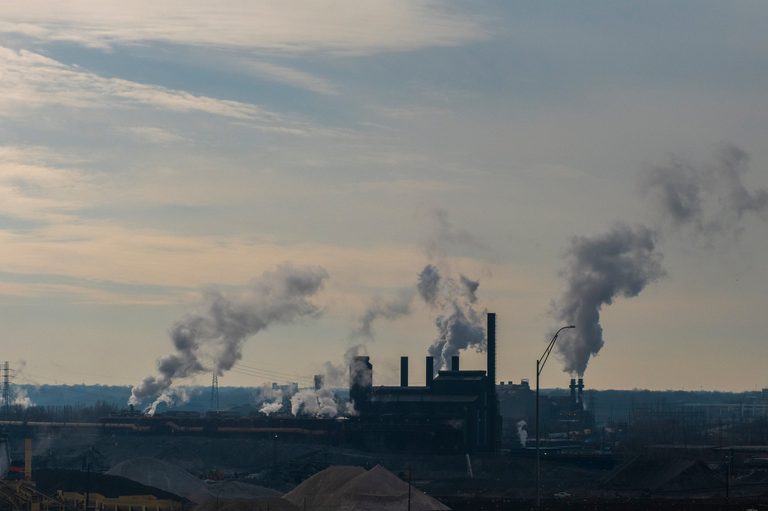
Cleveland City Council voted on Oct. 17 to adopt a sweeping update to the city’s air‑quality code, a move that could help residents breathe cleaner air and fund new pollution‑reduction projects. The changes come as the city ranks among the nation’s most challenging places to live with asthma, according to health data cited by local officials.
According to Signal Cleveland, the revised rules raise annual pollution‑permit fees by roughly $300,000—the first increase in more than a decade. The additional revenue will be earmarked for grants that businesses or neighborhoods can use to purchase emissions‑reducing technology, air‑purification equipment, or other measures that improve indoor and outdoor air quality.
The legislation also gives city staff new authority to enter residential or common‑area spaces—once they obtain resident permission—to assess indoor concerns such as cigarette smoke, marijuana smoke, or mold. While the law does not impose new indoor‑air standards, it allows staff to refer complaints to resources like mediation services or air‑purifier programs, said Christina Yoka, the city’s Chief of Air Pollution Outreach.
Vehicle exhaust, identified as the region’s leading pollution source, will face stricter oversight. The city already limits idling, but the new code holds facility operators and business owners accountable if fleet vehicles idle excessively. Dr. David Margolius, director of Public Health, noted that the rule provides a clearer path for enforcement on a complaint basis.
Electric‑vehicle owners gain added protection: landlords and homeowner associations may no longer prohibit residents from installing personal charging stations. The code also adds safeguards for demolition projects to limit asbestos exposure and requires city departments to develop contingency plans for high‑pollution days, such as those caused by Canadian wildfire smoke drifting over Lake Erie.
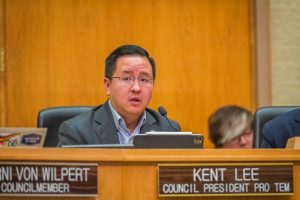
Council Member Austin Davis, who lives with asthma and missed a federal grant for electric‑stove replacements, called the passage personal. “When our federal government has let us down on so many fronts, the local governments have to step up,” Davis said in an interview with Signal Cleveland.
Some council members expressed uncertainty about the impact of current industrial emissions on pediatric asthma rates, noting that many factories on the East Side are now vacant. Nonetheless, the city will use a combination of air‑pollution data, poverty metrics, and asthma prevalence to target assistance where it is needed most.
What’s next: The city’s Division of Air Quality will establish the grant‑distribution program in the coming months, and residents can report violations through the city’s air‑quality complaint line at (216) 664‑7442. Ongoing outreach will include industry toolkits and staff training on the new idling and inspection requirements.
Sources: signalcleveland.org