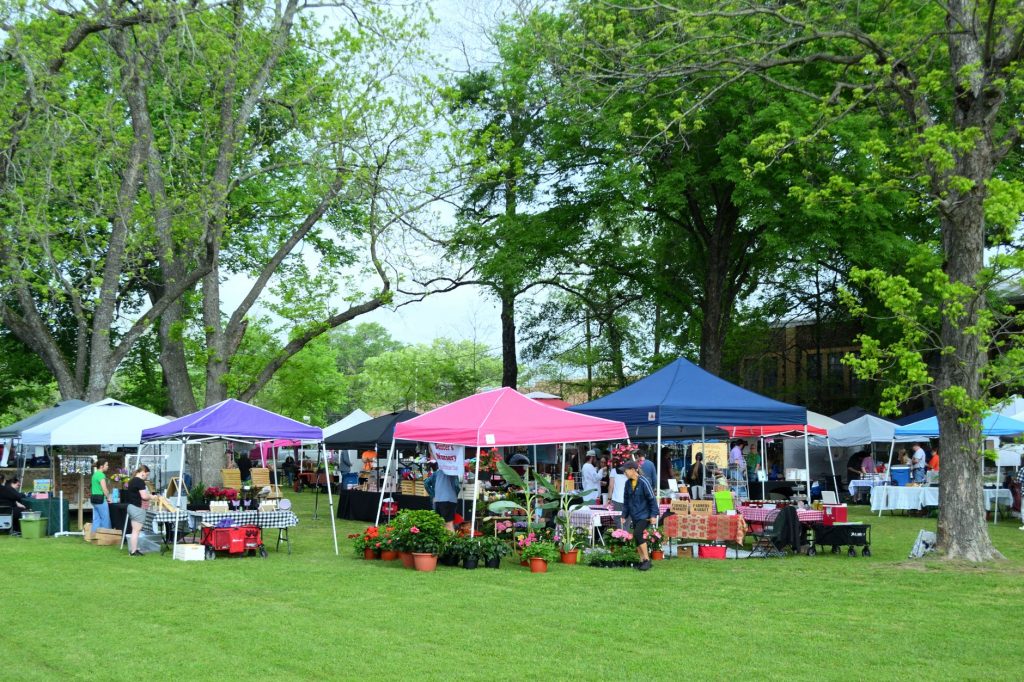
Saturday mornings at Clearfork Farmers Market have a particular rhythm. By eight o’clock the vendors are already set — produce laid out in bins, bread cooling on folding tables, coffee brewing in carafes. By nine the crowd thickens: strollers, leashed dogs, people who came for eggs and stayed for a breakfast taco. The market runs from 8 a.m. to noon, every Saturday, year-round, no seasonal hiatus. That consistency is a big part of why it has a loyal following instead of just occasional foot traffic.
The market occupies a stretch of open-air space along the Clearfork development on the southwest side of Fort Worth, near the Shops at Clearfork off Overton Ridge Boulevard. The surrounding retail is upscale, but the market itself doesn’t feel precious. Vendors are a mix of working farmers, cottage bakers, and specialty food producers — some of whom have held the same spot for years. Regulars know which stall carries the best sweet corn in July and who brings the sourdough that sells out before ten.
On any given Saturday the vendor count runs around thirty to forty. Produce tends toward seasonal Texas crops: tomatoes, squash, greens, pecans in the fall, citrus in winter from the Rio Grande Valley. Alongside the farm tables there are usually a handful of prepared food vendors — tamales, kolaches, breakfast burritos, pastries — and specialty producers selling honey, jam, pickles, and locally roasted coffee. Prices are honest. A dozen eggs runs around five to six dollars; a loaf of artisan bread typically four to eight. It’s not a budget market, but it’s not gouging anyone either.
What makes the Clearfork market work, practically speaking, is the layout. The space is flat, shaded in spots, and wide enough that the crowd doesn’t compress into a bottleneck the way some urban markets do. There’s room to park — the Clearfork lot is large — and room to walk without elbowing past every booth twice. Families with young kids, older couples on weekend routines, solo shoppers with a canvas tote: the demographic mix is broader than the surrounding zip code might suggest.
The market is run by the Texas Farmers’ Market organization, which operates several locations around the DFW area and maintains vendor standards around direct-to-consumer sales. That means most of what’s on the tables was actually grown or made by the person behind it, not brokered in from a wholesaler. It’s not a guarantee of perfection, but it’s a meaningful baseline.
First-timers should get there before nine-thirty if they want the best selection. The bread goes fast. So do cut flowers when someone brings them. A twenty-dollar bill covers a reasonable morning’s haul — some greens, a jar of something, maybe a pastry and a coffee to drink while walking the rows. Cash is still king at many booths, though a fair number now take cards or Venmo.
The market isn’t a destination event. It’s a standing Saturday appointment for the people who show up. That’s what keeps it worth coming back to.