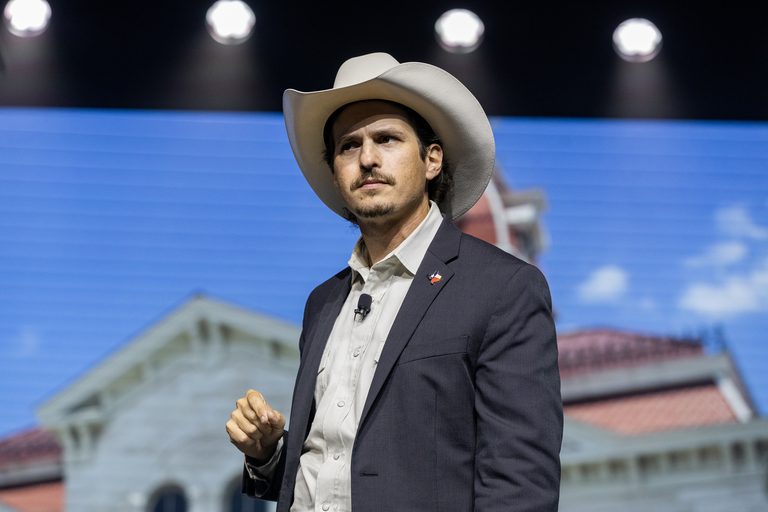
LUBBOCK, Texas – In a historic night for Texas agriculture, Lampasas rancher Clayton Tucker (35) clinched the statewide race for agriculture commissioner, defeating Republican Nate Sheets and ending a 40‑year Democratic drought in the office.
Victory confirmed
At 11 p.m. on Tuesday, Tucker held a wide lead, and the Associated Press called the race in his favor. Tucker thanked voters on social media, saying, “You proved that when Texans stand together to protect our land, our water, and our communities from the Greedy Few, organized people can beat organized money.”
What the win means for Texas farmers
The agriculture department oversees a $1.8 billion budget, providing financial assistance to farmers and ranchers, infrastructure grants for rural areas, aid for rural hospitals, and administering the National School Lunch Program. Tucker will inherit an agency facing drought‑stricken crops, rising inflation, tariff pressures, and encroaching urban development.
He pledged to work with lawmakers to lessen the negative impact of data centers on land, water and energy, to ensure school lunches are produced in‑state without harsh chemicals or dyes, to expand industrial hemp farming, and to challenge large agribusiness monopolies such as Tyson Foods and John Deere.
Support from longtime Republican
Outgoing commissioner Sid Miller, a lifelong Republican who has led the department since 2014, appeared with Tucker at data‑center community meetings earlier this year. Though Miller stopped short of endorsing Tucker, he criticized Sheets and Governor Greg Abbott, calling Sheets “not eligible for the office.” After the election, Miller said, “When it comes to agriculture, Clayton and I haven’t found anything we disagree on. He truly loves farmers and ranchers like I do. He’ll have some good, fresh ideas and probably make it better.” Miller offered his assistance for a smooth transition.
Campaign highlights
Tucker’s campaign focused on protecting Texas’ natural resources and supporting rural economies. He highlighted concerns over the rapid growth of data centers, which, while not directly regulated by the agriculture commissioner, affect water usage and land availability. He also promised to push for more local sourcing of school meals and to open new markets for Texas farmers.
Sheets and Tucker traded accusations over eligibility and agricultural experience. Attorneys for Tucker sent a letter to the state Republican Party alleging Sheets was ineligible, prompting a legal challenge before early voting began.
Looking ahead
With the election settled, Tucker prepares to lead the department into a period of recovery for Texas agriculture. He will need to navigate ongoing drought, inflation, and the balance between rural preservation and statewide economic development. His victory signals growing Democratic momentum in rural Texas, driven by cost‑of‑living concerns, the data‑center boom and school‑funding debates.
As the first Democratic agriculture commissioner in nearly four decades, Tucker’s tenure will be closely watched by both farmers and policymakers seeking to sustain Texas’ agricultural heritage while embracing new opportunities.
Original reporting: Texas Tribune (HLL/CB) — read the source article.