On a Tuesday afternoon, Clay Gornto is at the wheel before most people have finished their second cup of coffee. The studio is already warm, the radio low, and there’s a fresh batch of mugs drying on a wire rack near the window that faces Pendleton Street. He’s been doing this long enough that the motion looks almost accidental — hands rising, clay rising with them — but nothing about what comes out of this studio is accidental.
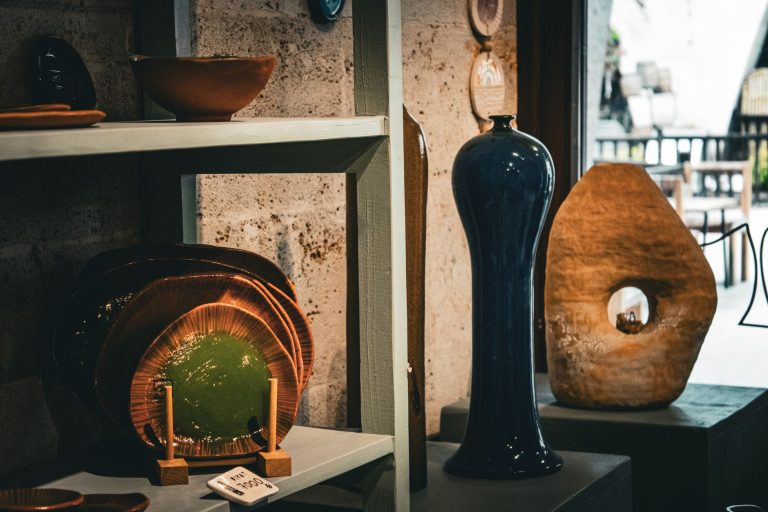
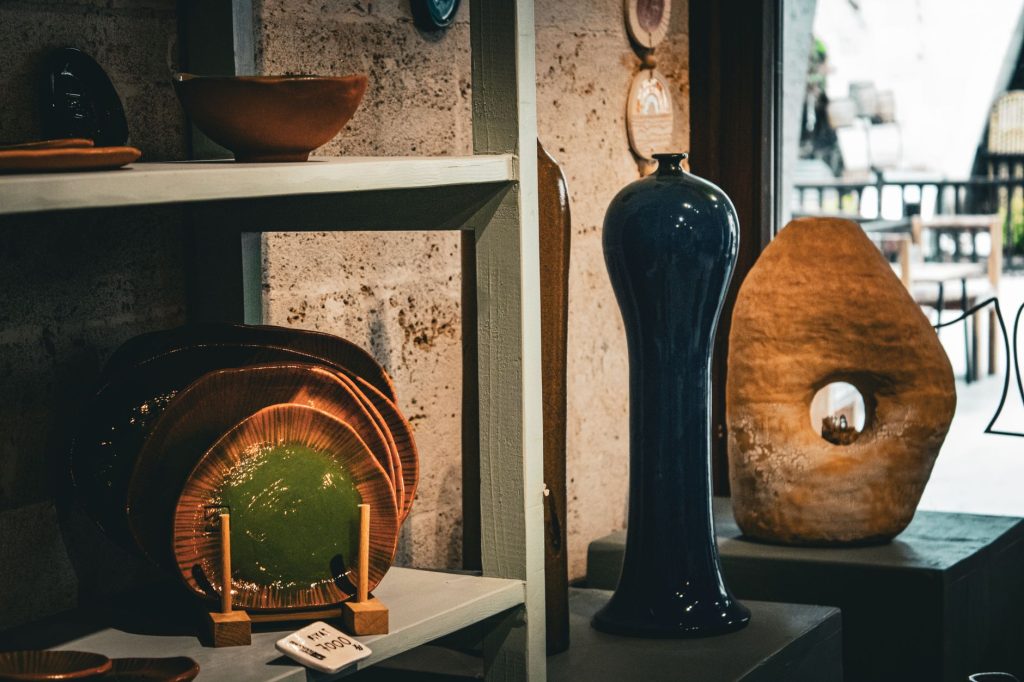
Spoonful Pottery sits in West Greenville, the neighborhood that spent a decade quietly absorbing artists, brewers, and working-class holdouts before anyone started writing about it. The building is modest, the kind that you notice only after someone tells you to look. Inside, the shelves are stacked with Gornto’s work: bowls with thick lips, mugs with handles that actually fit a hand, platters in earthy glazes that run from deep cobalt to something close to old mustard. The pieces are functional, and they’re meant to be used.
Gornto grew up in South Carolina and came back to it after studying ceramics elsewhere. He opened Spoonful in West Greenville because the neighborhood made sense — affordable space, genuine neighbors, no pressure to perform a certain kind of cool. What he built is part working studio, part gallery, and during certain stretches of the year, part classroom. He teaches wheel-throwing workshops for small groups, beginners mostly, and he seems to get real satisfaction out of watching someone make their first lopsided cylinder and decide they want to try again.
The workshops run a couple of hours and cost somewhere in the $65–$85 range depending on the session, which is reasonable for what you get: actual instruction, actual clay, and the chance to bring something home that you made with your own hands. Gornto doesn’t hover or micromanage. He demonstrates, he adjusts when someone’s struggling, and then he mostly lets people work. The studio doesn’t feel like a production.
What’s worth knowing is that you don’t have to take a class to visit. The gallery is open several days a week, and you can walk in and buy directly off the shelf. Prices are honest — a mug might run $30 to $45, a bowl a little more — and you’re buying something that was made in this room, by this person, in this city. That specificity matters to some people more than others, but once you’ve had morning coffee out of one of Gornto’s mugs for a few weeks, the mass-produced alternative starts to feel beside the point.
West Greenville has changed around the studio in ways that are sometimes good and sometimes complicated, as it goes with any neighborhood that gets discovered. But Spoonful has stayed grounded. It doesn’t chase trends or rebrand itself seasonally. Gornto makes pots. He teaches people to make pots. He sells them out of a room on Pendleton Street. The simplicity of it is, in its own way, a kind of resistance.
If there’s a best time to go, it’s a weekday morning or early afternoon, when the neighborhood is quieter and Gornto is likely to be working. Walk in, look around, ask a question if you have one. He’ll answer it without a sales pitch. That’s rarer than it ought to be.