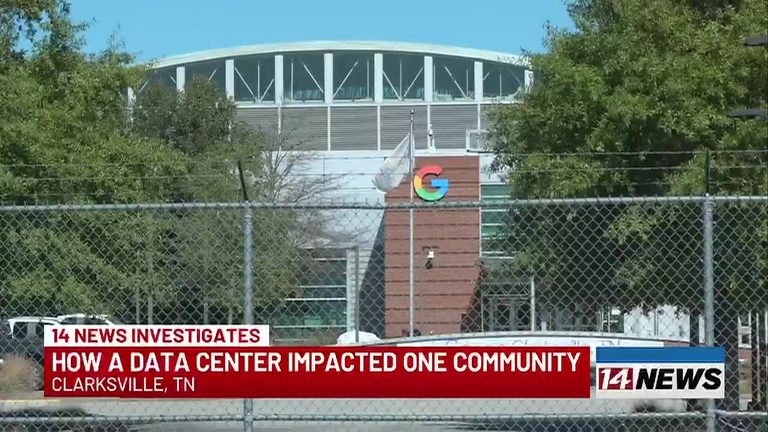
Clarksville, Tenn. – City and county leaders are drawing a line on further data‑center expansion after confirming that the region’s water and electricity supplies have hit their limits. The decision comes as Google’s 1.4‑million‑square‑foot data center, operating since late 2019, continues to draw significant utility usage.
Local officials cite resource constraints
Mayor Joe Pitts explained that the city simply cannot guarantee the water needed for another large‑scale facility. “We’ve reached our limit in terms of the amount of water that we can provide for that site,” Pitts said, noting that the existing center already relies on a confidential water‑use agreement with the city.
County Mayor Wes Golden echoed the sentiment, adding that the Tennessee Valley Authority’s rising rates and the county’s own budget pressures leave little room for additional demand. “Not at this time, to be honest with you. Just because of the amount of resources that they currently use,” Golden said.
Impact on residents and local economy
Neighbors such as Greg Farmer, who lives less than a half‑mile from the facility, report no noticeable increase in water or electric bills. Farmer praised the jobs the center has created, saying, “It’s given a lot of people here locally jobs they wouldn’t normally have.” He also noted that the berms surrounding the industrial park help keep light and sound from reaching his home.
While the data center has spurred economic activity, Pitts stressed that the city’s recent utility rate hikes are not solely the company’s fault. “That’s not due to Google necessarily, data centers. That’s just regular inflation,” he said, pointing to broader price increases for gas, water and electricity.
Community benefits and future outlook
Google has invested more than $6 billion in Tennessee since arriving, and the company has supported local nonprofits and helped expand free Wi‑Fi in three city parks and in low‑ to moderate‑income neighborhoods. Pitts highlighted those contributions as evidence of the firm’s positive community role.
Nevertheless, both city and county leaders remain cautious. They are drafting regulations that would require any future data‑center applicant to demonstrate sufficient water and power capacity before approval. “We’re really reticent to approve another data center to come into our community,” Pitts said.
What’s next for data‑center development?
County commissioners are working on a set of guidelines that could limit future proposals, while the city continues to monitor utility usage closely. Golden added that advances in technology could eventually reduce resource demands, leaving the door open for future projects if they become more efficient.
For now, Clarksville’s leadership is prioritizing responsible stewardship of essential resources, ensuring that growth does not outpace the community’s ability to provide reliable water and electricity to its residents.
Original reporting: 14 News WFIE Evansville (news) — read the source article.