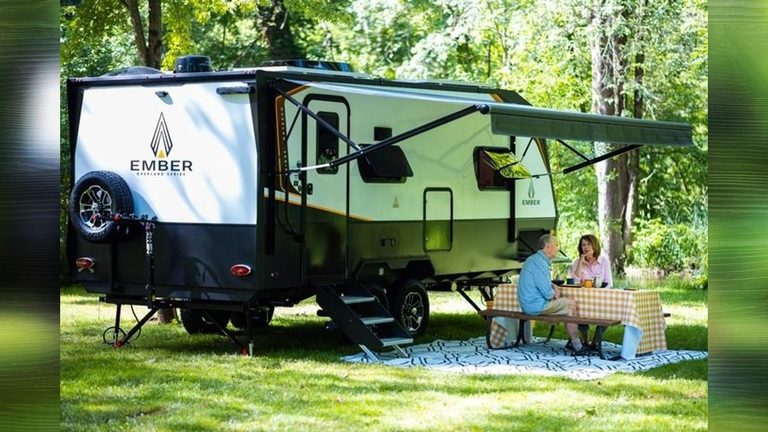
The Pacific Northwest’s first hard freezes typically hit Clark County in late October or early November. For RV owners, that signal means it’s time to protect the vehicle’s plumbing before water expands and causes costly damage.
Why winterization matters
Water expands when it freezes, and an RV has many hidden reservoirs – supply lines, the water heater, pump, low‑point drains, faucets, the toilet valve and outdoor shower. “One hard overnight freeze can crack a fitting or split a line,” said Brian Free, Parts & Service Manager at McCords Vancouver RV in Battle Ground. Most owners don’t discover the problem until spring, when water leaks inside walls or under floors, leading to water damage, delamination and mold.
A proper winterization costs a fraction of those repairs and also provides an opportunity to inspect the roof and seals before months of rain.
When to start
Free recommends beginning the winterization process by mid‑to‑late October, and always before the first forecast hard freeze (temperatures below 32°F for several hours). The foothills around Battle Ground often see frost earlier than central Vancouver, so waiting can fill the shop’s schedule quickly.
“Don’t wait for the cold snap,” Free warned. “Service schedules fill up fast once the forecast turns.” Those planning a late‑season trip should book an appointment right after returning, while owners who camp through winter need a different approach, such as heated tank pads and skirting rather than a full winterization.
Commonly missed steps
Even experienced owners overlook details that can cause trouble. Free listed the most frequent omissions:
- Water heater bypass: Skipping the bypass can trap water in a 6‑ to 10‑gallon tank, leading to frozen lines.
- Outdoor showers, kitchens and wash‑down hoses: These exposed lines are easy to forget.
- Ice makers, washers and dishwashers: Each requires its own winterization steps.
- Low‑point drains and check valves: Water can remain trapped even after the system appears empty.
- Holding tanks: Dump, flush and add a little antifreeze to the P‑traps.
- Batteries: A connected battery can discharge and freeze; charge it, then disconnect or use a maintainer.
- Moisture and rodents: Seal entry points and control interior humidity in our wet climate.
- Roof and seals: Fall is the ideal time to locate and repair failed seals before winter rain.
McCords Vancouver RV services
McCords, part of the Vancouver Toyota family, offers winterization packages starting at $95 for a basic service and $190 for a complete job. The complete service includes draining and bypassing the water heater, blowing out lines and running RV antifreeze through every fixture, plus roof and window seal checks and battery testing. A 40‑POINT Inspection is $360, or $499.95 with appliance service.
Mobile service option
For owners unable to bring their RV to the shop, McCords now provides a mobile service. A technician can winterize the unit in the owner’s driveway or storage site. “We kept hearing the same thing from customers: getting the RV to us is often the hardest part,” Free said. The mobile service costs a $100 travel charge plus a $95 minimum labor charge, totaling $195 for a half‑hour of labor.
How to schedule
To arrange a winterization appointment—whether at the shop or via mobile service—call McCords Vancouver RV at (360) 816‑1346 or visit their location at 17733 NE 120th Avenue, Battle Ground, WA 98604.
Original reporting: Clark County Today (Vancouver WA) — read the source article.