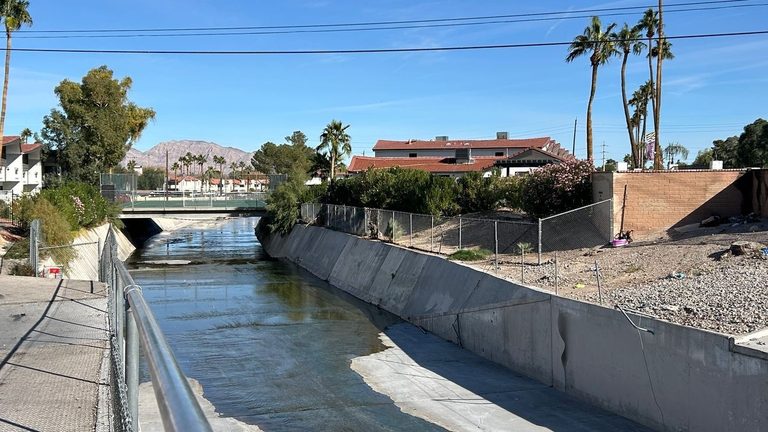
Las Vegas – Following the second‑wettest October on record, Clark County officials are reassuring residents that the valley’s extensive flood‑control network is prepared for the upcoming El Niño season. The district oversees 722 miles of channels that move runoff from streets to Lake Mead, and recent upgrades are designed to keep water out of neighborhoods and reduce traffic disruptions.
Recent storms highlight system’s role
Bill Bellis, chief meteorologist at News 3, described the October event as “two inches of rain in less than six hours,” a volume that quickly filled local channels. While the runoff was still moving through a channel near the Paradise Palms community, officials said the system performed as intended, diverting water away from homes and businesses.
How the flood‑control network works
Jacob Sanders, public information coordinator for the Clark County Regional Flood Control District, explained that many residents are surprised to learn that city streets are an integral part of the flood‑control system. “Water moves from streets into the channels and eventually toward Lake Mead,” he said. The district’s long‑term plan includes adding underground infrastructure that will pull water away from properties, reducing visible flooding and speeding up traffic recovery after storms.
El Niño outlook
Bellis noted that warmer ocean temperatures associated with El Niño can generate more moisture, typically leading to above‑average precipitation from late fall through early spring. He cited past strong El Niño seasons: 1997‑98 produced more than three inches of rain over a three‑month period, 2015‑16 was a “dud” with only half an inch, and the most recent cycle delivered about an inch and a half, close to normal.
While the valley sits on the northwestern edge of the typical El Niño impact zone, Bellis warned that the chances of heavier rain are higher in Southern California, central Arizona and southern Arizona. “The chances are less likely here compared to San Diego, Los Angeles, Phoenix and Tucson,” he said.
Preparedness measures
Sanders emphasized that the flood‑control system is ready for even record‑breaking rains. “Our flood‑control system can handle the heaviest of rains. We use a long‑term plan that looks several years ahead to anticipate and protect our growing community,” he said. Ongoing projects focus on making rainfall impacts less visible and less disruptive, with a particular emphasis on underground conveyance to keep water away from homes.
What residents can expect
Experts agree that the most likely scenario this winter is a series of lighter rain events spread over time, adding up to a larger seasonal total rather than a few intense downpours. Residents are encouraged to stay informed, watch for flash‑flood warnings any time of year, and follow any road‑closure updates issued by the district.
Overall, the combination of a robust channel network, recent underground upgrades, and a proactive long‑range plan gives Clark County confidence that it can protect neighborhoods and keep the valley moving, even if El Niño brings a wetter-than‑usual season.
Original reporting: News 3 KSNV Las Vegas (local) — read the source article.