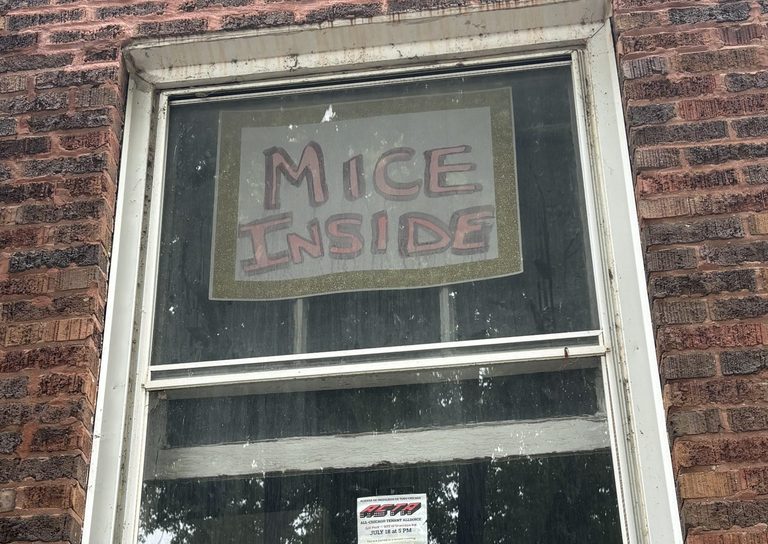
RAVENSWOOD — Tenants of a 22‑unit apartment building at the corner of Winnemac and Winchester avenues have lived with repeated habitability problems for decades. Hand‑made signs posted in a first‑floor window warned prospective renters of “No hot water,” “Mice inside” and cited the Illinois Landlord Retaliation Act. The signs, which remained up from May until mid‑last month, sparked a social‑media conversation that resurfaced complaints dating back to the 1990s.
Tenant experiences reveal a pattern of neglect
Current and former renters described a litany of issues: persistent lack of hot water, low water pressure, mold, bedbugs, sewage in the laundry area, a natural‑gas leak after a landlord‑installed stove, and frequent mouse infestations. Several tenants said they were forced to shower at gyms or friends’ homes because the building’s showers were unusable.
Agatha Arnott, who moved in August 2024 and left in January, recalled a sink that would not drain. After threatening to withhold rent and hiring a plumber herself, building owner Ben Reznik finally appeared to fix the problem. Arnott also reported repeated hot‑water outages, inadequate heat, and temperatures that fell below the city‑mandated minimum of 68 °F.
Other renters confirmed the same problems. Em Holzhauer, who lived in the unit from March to July 2026, was told to pay an extra $100 in rent because two occupants would use more water than one. Within weeks, the water pressure in both the shower and kitchen vanished. When Reznik inspected the shower, he allegedly said, “Look, it’s fine,” even as the water shut off mid‑shower.
Long‑time resident KJ Whitehead (2016‑2020) recalled a toilet that failed to flush for over a month. Multiple tenants reported that the landlords dismissed legitimate concerns, sometimes blaming tenants for “not turning the knobs right” or claiming the water temperature was “just fine.”
City officials prepare legal action
According to the Department of Law, city attorneys are collaborating with the Department of Buildings to draft a circuit‑court complaint that will address a series of plumbing code violations. The building has accumulated at least 30 code violations since 2005, including exterior structural issues, masonry deterioration, window decay and repeated failures to allow interior inspections.
One 2014 inspection noted that the owner refused entry, and an unverified complaint alleged that the landlord entered apartments without permission. A former tenant identified only as Coniglio confirmed that Ben Reznik entered her unit while she was undressing, to which Reznik responded, “People make mistakes.”
The city’s most recent inspection, conducted on August 24, 2026, responded to a 311 plumbing call. Inspectors did not find a violation for that specific request, but the broader pattern of non‑compliance remains under review.
Legal protections for tenants
Victoria Ogunsanya, supervising attorney with the Law Center for Better Housing, explained that the Chicago Residential Landlord & Tenant Ordinance (RLTO) requires landlords to provide essential services—heat, hot water, electricity, gas and plumbing—within 24 hours of a tenant’s notice. If the landlord fails to act, tenants may restore service themselves, hire a plumber or purchase a space heater, and deduct the cost from rent after presenting receipts.
Tenants who have documented the problems say they have recorded water‑pressure issues on video and hired independent plumbers who confirmed the need for new piping. The Rezniks, however, have consistently claimed there is nothing they can do.
Community response
Lauren Sims, a North Side organizer with the All Chicago Tenants Alliance, visited the property and noted that many units remain vacant and roughly half of the occupants receive subsidized housing. She warned that subsidized‑housing tenants may be reluctant to complain for fear of jeopardizing their assistance.
Despite repeated complaints, the Rezniks have not responded to requests for comment. The city’s ongoing legal effort represents a rare instance of municipal authorities stepping in to enforce basic habitability standards for a building that has long been a source of frustration for its residents.
As the case moves toward court, tenants hope the lawsuit will compel the owners to address the building’s plumbing, heating and pest‑control deficiencies, restoring safe and livable conditions for current and future renters.
Original reporting: Block Club Chicago — read the source article.