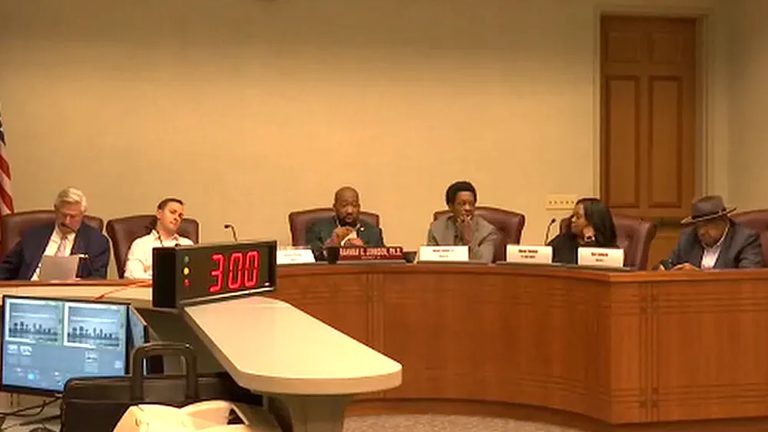
Jacksonville City Council member Rahman Johnson announced plans to file a new ordinance on Friday that would permit religious institutions to develop affordable housing on up to three acres of their property. The proposal, dubbed the “Yes in God’s Backyard” bill, has the backing of Mayor Donna Deegan and is intended to expand housing options for low‑ and moderate‑income families while preserving the faith‑based character of the sites.
According to JAX Today, the bill would apply only to churches, synagogues and other religious sites that have existed for at least ten years. Developments must comply with existing zoning regulations, and no city funds would be allocated to the projects. Johnson emphasized that the legislation creates a pathway for development without offering direct incentives, stating, “We are providing the pathway for it to work, but we are not giving the incentives for that.”
The ordinance requires a minimum of 40% of the rental units to be designated as affordable, with rents set at or below the area median income. Units would be reserved for households earning no more than 80% of the area median income for a period of at least 30 years. Density would be capped at 60 units per acre, the highest level currently permitted under Jacksonville’s code, and each proposal would undergo an expedited review while maintaining neighborhood protections.
Council member Ken Amaro asked how a church without development funds would participate. Jacksonville Affordable Housing Director Joshua Hicks clarified that the religious institution would retain ownership of the land but would partner with a private developer to secure financing, tax credits and mortgages. The developer would act as the primary builder, while the church could serve as a co‑developer but would not be responsible for construction. Hicks also noted that a church could not sell the land after completion to profit; the land would transfer to the developer if the church ceased operations.
Support for the concept came from community members such as Michelle Williams, whose late father, Rev. Landon Williams, built the 121‑unit Rosalind Villas senior community adjacent to Greater Macedonia Baptist Church in 2002. Williams praised the public‑private partnership model, saying, “Any time you can get a public‑private partnership to work, it is for the good of the people.”
The proposal reflects the mayor’s broader effort to address Jacksonville’s affordable‑housing shortage. Johnson said multiple solutions are needed and that this framework “opens the door wider” for faith‑based organizations to contribute to the city’s housing stock.
What’s next: The bill is slated for filing on Friday, after which it will be reviewed by council committees before a full council vote later this month. If approved, the ordinance would create a new avenue for churches and other religious sites to partner with private developers and add affordable units to Jacksonville neighborhoods.
Sources: jaxtoday.org