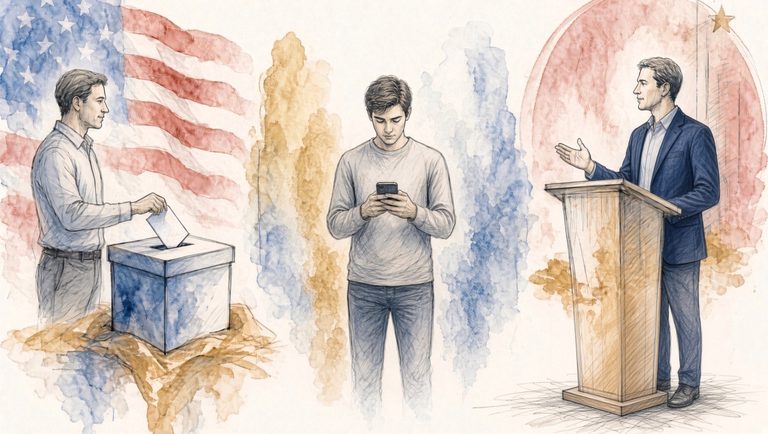
In the wake of Tuesday’s election, many Christian patriots are reflecting on the stark reality that politics is won by those who actually show up. Posting anonymous comments or sharing memes may feel cathartic, but real change requires stepping out of the digital arena and into the voting booth and community.
Voting Is Just the Beginning
While voting remains a crucial first step, the author stresses that it is insufficient on its own. He urges readers to bring spouses, parents, siblings, and friends to the polls, and to create simple sample ballots or slate cards that can be printed and distributed within their immediate networks. Early voting locations are often separate from Election Day sites, and a quick fifteen‑minute early‑voting line can be a persuasive selling point.
Know Your Local Races
Understanding the full ballot is essential. In Dallas County there are 32 district courts; Harris County has 67. Voters often lack knowledge of down‑ballot offices such as county clerk, justice of the peace, or local party chair. The piece encourages readers to research these positions, explain how candidates’ policies will affect taxes and community values, and share that information with neighbors.
Grassroots Outreach Works
Personal outreach can move elections. The author recounts taking a slate to a polling place, introducing himself to fellow voters, and explaining why his chosen candidates align with a Christ‑centered vision for the state. All but two of those candidates won in his county. He recommends signing up as a poll greeter through a county party or campaign and, where legal, bringing your own slate cards to the polls.
Host Community Events
Beyond the ballot, the author suggests hosting meet‑and‑greets at homes or local restaurants, inviting candidates to discuss issues over barbecue or a family‑friendly activity. Even modest fundraisers—$50 to $100 contributions—can motivate donors to become active participants rather than passive spectators. Larger donors can be organized for bigger events, and a modest local political action committee can raise a few thousand dollars to influence precinct‑level races.
Direct Communication Is Key
Personal letters, text messages, and peer‑to‑peer outreach outperform generic mass mailings. Leaving slate cards at churches, gyms, or gun ranges, and even knocking on doors, can make a tangible impact. The author acknowledges that this work may feel “crazy,” but emphasizes its necessity for lasting change.
Keep the Momentum After Election Day
Election Day is not the end of the effort. Joining or forming local grassroots clubs—Young Republicans, local party chapters, or independent civic groups—helps sustain the network for future cycles. If a community lacks an active organization, the piece encourages readers to start one, ensuring that the momentum built this year carries forward.
Original reporting: Texans for Fiscal Responsibility — read the source article.