For the first time in more than ten years, residents of Chicago’s North Park, Mayfair, North Mayfair, Peterson Park and Sauganash neighborhoods had a chance to weigh in on the city’s long‑awaited Weber Spur rails‑to‑trails project. The public hearing, held Wednesday night at Northeastern Illinois University, marked the latest step in a plan to convert an old Union Pacific rail line into a 2‑mile, mixed‑use trail.
Project overview and timeline
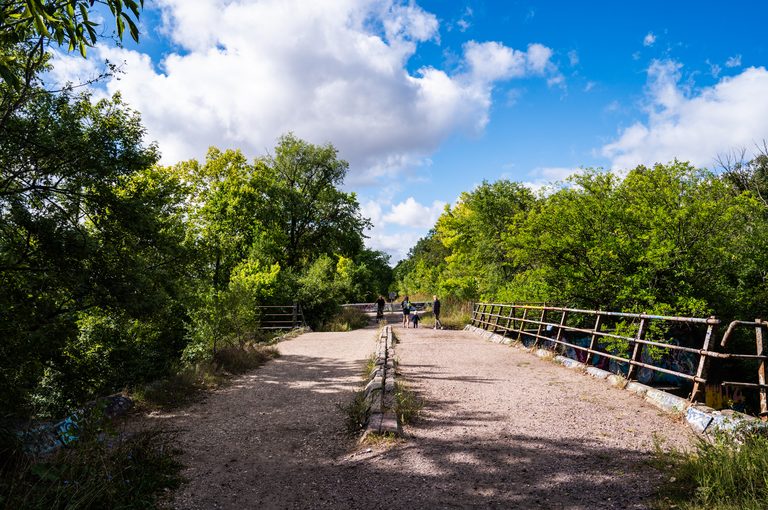
The proposed trail would run diagonally from Devon Avenue in the northeast to Elston Avenue in the southwest, connecting to the North Branch Trail, the Sauganash Valley Line Trail and the Lincolnwood segment of the former Union Pacific Weber Spur. City Department of Transportation (DOT) officials said the first phase – preliminary designs and an environmental review – is nearly complete. Phase two, which includes detailed engineering, construction plans and land acquisition, is expected to begin in 2027.
Negotiations are under way with Union Pacific Railroad to purchase the right‑of‑way. If the deal closes, the DOT aims to start construction in 2030, with an estimated two‑year build period.
Funding and support
DOT spokesperson Erica Schroeder reported the total project cost at about $81.9 million. So far, $45.88 million has been secured through the Chicago Metropolitan Agency for Planning’s federally funded Transportation Alternatives Program, and Rep. Mike Quigley added $850,000 in federal funding last February.
Local advocates expressed optimism. Jim O’Reilly, president of the North Branch Trail Alliance, who attended the 2015 hearing, called the progress “very encouraging.” Dana Smith, owner of Irving Park Bike Repair, said the Weber Spur “seems like the last puzzle piece” for the city’s growing network of recreational trails.
Design details and community concerns
The DOT plans an asphalt, ADA‑accessible trail 12 feet wide with a 2‑foot shoulder. At‑grade crossings are slated for Pulaski Road and Devon Avenue, while roundabouts will manage intersections with the North Branch Trail, Bryn Mawr Avenue and the Sauganash Valley Line Trail. Access ramps will be built at Elston, Foster, Tripp, Peterson, Glen Lake and Rosemont avenues, and existing bridges over Elston, Foster, the North Branch of the Chicago River and Peterson Avenue will be rehabilitated.
Community input highlighted environmental considerations. Arthur Wawrzyczek, volunteer steward at LaBagh Woods, supported the trail but urged that the segment through the woods remain unlit to protect migratory birds and insects, and requested a buffer of native grasses and shrubs along the path.
Next steps
DOT project director Lubica Benak emphasized the trail’s role as “a vital connector to other bike infrastructure in this region.” She noted that additional public meetings are planned for next year to continue gathering resident feedback.
Residents can submit comments through October 28 via the city’s online portal. The Weber Spur is expected to become a critical link for other planned routes, including the Crosstown Trail, which aims to convert a nearby Union Pacific freight line into a 3.2‑mile bike path.
With funding largely in place and design work nearing completion, Chicago’s cyclists and families look forward to a new, safe, and accessible route that strengthens the city’s commitment to active transportation and neighborhood connectivity.
Original reporting: Block Club Chicago — read the source article.