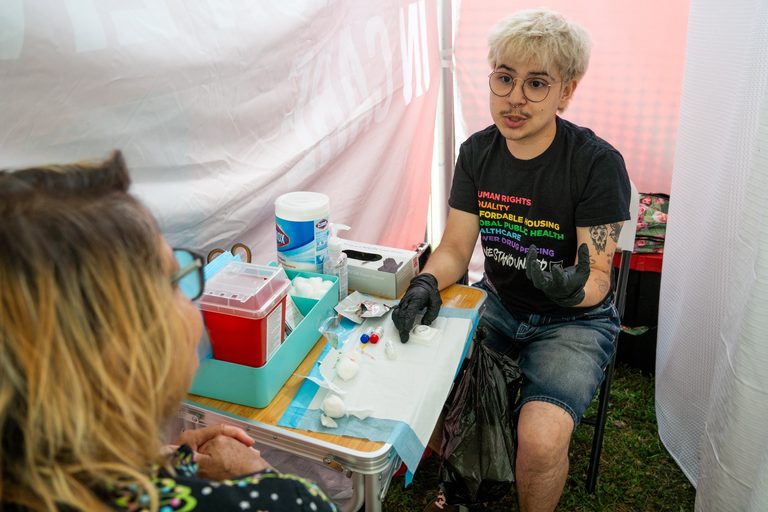
When Ramone de Jesus arrived in Chicago from Puerto Rico, a lifelong flight‑attendant career ended after an HIV diagnosis left him unable to travel. Isolated and searching for work, he turned to CALOR – Comprensión y Apoyo a Latinos en Oposición – a nonprofit founded in 1990 that serves Latino residents living with or at risk for HIV/AIDS.
With CALOR’s assistance, de Jesus secured food, housing applications and therapy, and found a community of peers who share his experience. “It’s hard getting old and lonely with the disease,” he said. “I need to be around people that are in the same situation as me.”
Rising Latino HIV Cases Prompt Targeted Outreach
Chicago’s public‑health data show a sharp rise in HIV diagnoses among Latinos. In 2024, the city recorded 818 new HIV cases, nearly half of which were among Latino residents. The increase prompted local organizations to expand services in Spanish, offering testing, counseling and education at bars, festivals and community events.
CALOR and the Puerto Rican Cultural Center (PRCC) have stepped up, providing culturally appropriate prevention and treatment programs. Ricardo Jimenez, senior director of PRCC’s Vida/SIDA program, emphasized that antiretroviral therapy (ART) saves lives and prevents transmission, while pre‑exposure prophylaxis (PrEP) can stop new infections if it were more affordable.
Federal Cuts Complicate Efforts
The Trump administration’s recent reductions in federal health funding have added pressure to local providers. In early 2025, the administration cut $600 million in CDC public‑health grants for HIV and STD prevention in four states, including Illinois. A federal judge temporarily blocked the order, but litigation continues.
Later that year, the administration halted renewal of $46 million in direct federal funding for 96 community organizations that conduct localized HIV testing and PrEP navigation, two of which operate in Illinois. The remaining funds are being redirected to state and local health departments, with no requirement that a set share go to community groups.
Medicaid cuts under the administration’s “One Big Beautiful Bill Act” (H.R. 1) threaten to reduce coverage for roughly 40 % of non‑elderly adults living with HIV. The bill projects a $911 billion reduction in Medicaid spending over ten years, potentially leaving ten million more Americans uninsured by 2034. Bridget Magner, senior director of population health at Erie Family Health Centers, warned that loss of insurance could force people to delay care while they focus on basic needs.
Local Experts Offer Context
Public‑health officials note that the rise in diagnoses may reflect increased testing rather than a pure surge in new transmissions. Meg McElroy of AIDS Foundation Chicago cautioned that more testing uncovers previously undiagnosed cases, inflating the numbers.
Dr. Travis Gayles, CEO of Howard Brown Health, linked part of the spike to an influx of migrants arriving after Texas’ Operation Lone Star in 2022. Many newcomers had never been tested for HIV, raising community risk. He also observed a higher proportion of AIDS diagnoses, indicating that many individuals have lived with untreated HIV for years.
Provisional 2025 data show a 22 % decline in new Chicago HIV cases compared with 2020, and a drop in the share of Latino diagnoses from 50 % in 2024 to about 34 % in 2025. Officials attribute the improvement to intensified outreach, Spanish‑language education and community‑based testing, while also acknowledging that stricter immigration enforcement may have discouraged some from seeking care.
Looking Ahead
Community leaders remain committed to expanding resources. CALOR continues to staff tables at local festivals such as Fiesta del Sol, offering testing, counseling and referrals. Jimenez stressed that health care is a human right and urged policymakers to restore equitable funding.
Chicago will release finalized 2025 HIV data next month. In the meantime, local nonprofits are pressing for sustained federal support, affordable PrEP and Medicaid protections to ensure that the city’s Latino residents receive the care they need.
Original reporting: Block Club Chicago — read the source article.