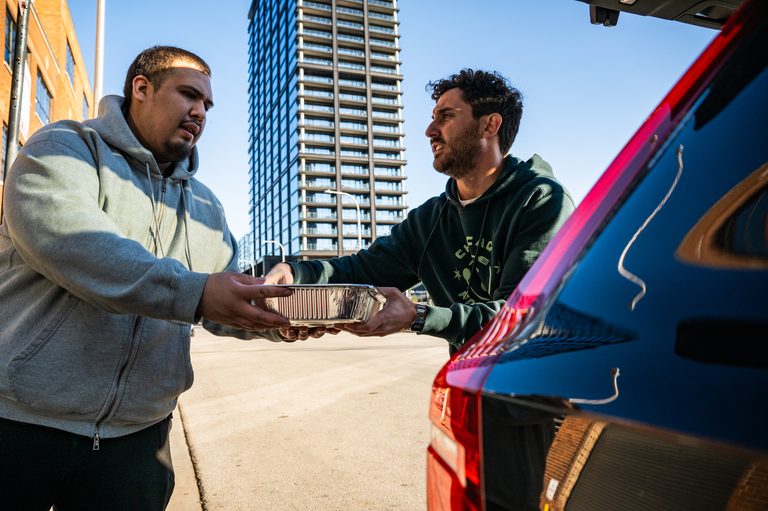
North Center resident Jake Tepperman loaded his car with trays of cheesy potatoes and scrambled eggs on a sunny Tuesday and drove less than a mile to the ReVive Center for Housing and Healing. The delivery was part of Chicago Food Rescue’s weekly effort to bring rescued meals to the nonprofit that has served Chicago’s homeless community for more than a century.
Volunteer‑driven model fills a critical gap
Chicago Food Rescue, founded by Tepperman in October 2024, coordinates roughly 50 food‑rescue trips each week with the help of an app that matches volunteers to pick‑up and drop‑off locations. The organization has completed more than 3,000 rescues in its first two years, recovering over 700,000 pounds of surplus food that would otherwise have been wasted.
“We want to make it as easy as possible for volunteers to get involved,” Tepperman said. “Hannah and I could be doing rescues all day and still not come close to having the same impact.” He runs the nonprofit with one other full‑time staff member, program director Hannah Roucher.
Partnership with ReVive Center boosts community meals
ReVive Center for Housing and Healing, located at 1668 W. Ogden Ave., is one of nearly 130 local agencies that receive food donations from Chicago Food Rescue. Director of programs Andrea LeFlore explained that the center, opened in 2020, provides a safe space for unhoused residents and families in affordable housing. While the center does not operate a pantry, regular food deliveries have allowed it to serve about 800 meals each month.
“People don’t want to do a five‑page housing assessment when they haven’t eaten in three days,” LeFlore said, noting that reliable meals improve both health and the sense of community among residents.
Saving food, cutting waste, protecting the environment
Chicago Food Rescue collects surplus food from grocery stores, farmers markets, caterers and businesses of all sizes. The organization’s app ensures that donors and recipients are geographically close, reducing travel time, keeping food fresh, and fostering a connection between those who give and those who receive.
According to a recent Greater Chicago Food Depository report, about one‑third of Chicago households are food insecure. Nationwide, 13.7 % of households faced food insecurity in 2024. The U.S. wastes roughly 92 billion pounds of food each year, a major source of greenhouse‑gas emissions. Tepperman estimates that Chicago Food Rescue’s efforts have prevented more than 1.9 million pounds of carbon dioxide from entering the atmosphere.
Looking ahead
Entering its third year, Chicago Food Rescue aims to expand its volunteer base and donor network, especially on the city’s South and West sides. Tepperman hopes to add a third full‑time staff member to support growth.
Community members who wish to volunteer, donate food, or contribute financially can learn more on the organization’s website.
Original reporting: Block Club Chicago — read the source article.