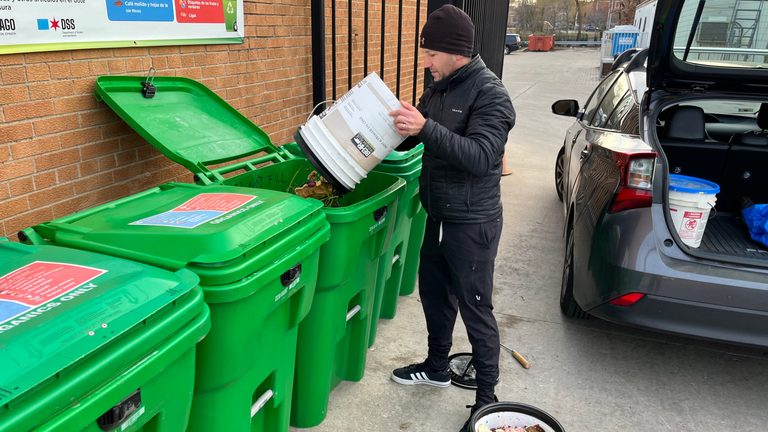
Chicago’s Department of Streets and Sanitation announced this week that its free Food Scrap Drop‑Off program has grown to include eight additional Chicago Public Library branches. The expansion raises the total number of drop‑off sites to 21 libraries and 40 locations across all 77 community areas.
Program growth and goals
Deputy Commissioner of Policy and Sustainability Chris Sauve said the program, launched in October 2023, has already diverted roughly 2.4 million pounds of waste from landfills to a local composting facility. More than 9,500 households are currently enrolled, and the department hopes to reach 10,000 households before the end of 2026.
How the new sites work
The new library locations feature clearly marked bins with QR codes that residents can scan to sign up for updates, report issues, and help the city track usage. While registration is optional, Sauve recommends it so participants receive timely information about the service.
Residents may drop off fruit and vegetable scraps, cooked food, meat and fish bones, dairy products, bread and grains, coffee grounds, tea leaves (without filters) and eggshells. The program also accepts pumpkins after Halloween, providing a convenient outlet for seasonal waste.
Community benefits
By diverting food waste from landfills, the city reduces methane emissions—a greenhouse gas about 80 times more potent than carbon dioxide. Sauve explained that after collection, crews transport the material to a transfer station, then to Patriot Acres, a composting facility in Des Plaines, where it transforms into compost within 45 to 90 days.
One of the new sites, Legler Regional Library in West Garfield Park, already houses a food pantry. Unused pantry food will be composted through the program, further extending the city’s waste‑reduction efforts.
Future expansion
Sauve indicated that the department is scouting additional neighborhoods, including Lincoln Park and the downtown core, where residents have expressed interest in new drop‑off locations.
Chicagoans can view a full map of all 40 sites and learn more about the program at chi.gov/composting. The city encourages all households to participate, noting that broader involvement will improve overall diversion rates and support Chicago’s environmental stewardship goals.
Original reporting: Block Club Chicago — read the source article.