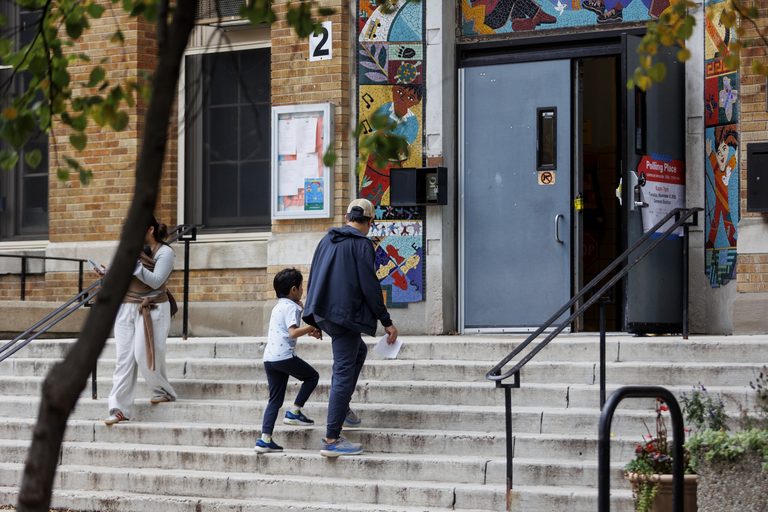
Chicago voters went to the polls on Tuesday night to elect the city’s first fully‑elected Chicago Public Schools (CPS) board, a historic shift that could reshape how schools are run and funded. According to borderlessmag.org, preliminary results show a thin pro‑school‑choice majority that may curb the Chicago Teachers Union’s (CTU) influence and bring new voices to budget and policy discussions, directly impacting parents, students and neighborhood schools.
The board’s 21 seats are expected to split 11‑10 in favor of candidates backed by pro‑choice groups such as the Illinois Network of Charter Schools, the Urban Center and the Common Ground Collective. Those groups, along with the Service Employees International Union (SEIU), helped elect school‑board president Jessica Biggs, whose campaign received more than $1 million from billionaire donor Michael Sacks and over $200,000 from SEIU’s political action committee, according to the same source.
Four district races—3b, 5b, 6a and 7a—remain too close to call as the Chicago Board of Elections continues counting ballots. Overall turnout was robust, with more than 568,000 votes cast for the citywide president race and roughly 540,000 votes in district contests, a slight decline from the 800,000+ votes cast in the 2024 school‑board election but typical for a midterm cycle.
Board newcomers will face immediate challenges, including a potential budget shortfall if anticipated state aid does not materialize during the November veto session. A majority of the presumed winners have pledged not to automatically raise property taxes to the legal limit, signaling a fiscally conservative approach. Additionally, most elected members signed a pledge to ban AI‑based tools for students and staff, though they may refine the policy after further study.
What’s next: The new board is slated to convene in early 2027, when it must address the budget gap, charter‑school funding and the AI ban. Parent‑advocacy leader Hal Woods warned that the board’s mixed composition could lead to gridlock or, alternatively, coalition‑building across factions. Residents can expect public hearings and board meetings throughout the coming months as elected members work to balance fiscal responsibility with educational quality for Chicago’s diverse student body.
Sources: borderlessmag.org