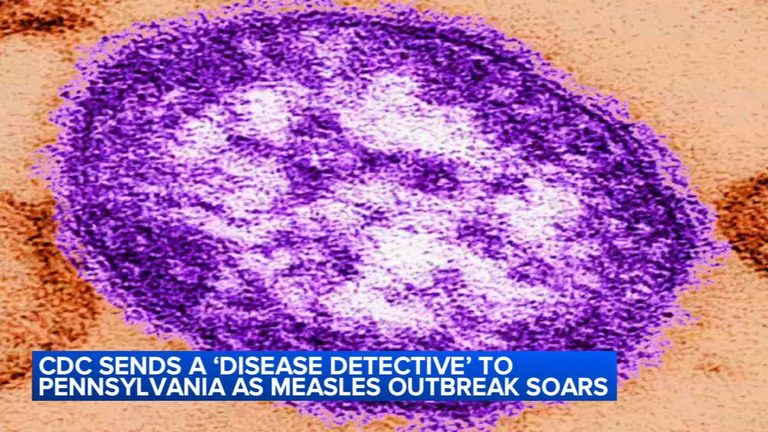
The Pennsylvania Department of Health announced that the Centers for Disease Control and Prevention (CDC) will dispatch a senior epidemiologist—referred to as a “disease detective”—to the Commonwealth later this week. The specialist will work with state and local health officials for up to three weeks, providing technical assistance aimed at curbing what officials describe as an urgent public‑health problem.
Scope of the Outbreak
Since the start of 2026, measles has infected more than 1,200 Pennsylvanians, with the highest concentrations of cases reported in Lancaster, Mifflin and Chester counties. Six measles‑associated deaths have been recorded statewide, underscoring the seriousness of the situation.
Why the CDC Is Involved
Measles is a highly contagious viral disease that can lead to severe complications, especially in children and individuals with weakened immune systems. The CDC’s involvement signals the scale of the outbreak and the need for coordinated, expert‑driven response. The agency’s epidemiologist will review case data, assess vaccination coverage gaps, and advise on targeted outreach to communities with low immunization rates.
Public‑Health Recommendations
State health officials continue to urge residents to verify their vaccination status. The measles, mumps and rubella (MMR) vaccine is safe, effective, and the primary tool for preventing further spread. Parents are encouraged to ensure that children receive the two‑dose series, and adults who lack documented immunity should consider getting vaccinated promptly.
Local health departments are increasing outreach efforts, including pop‑up vaccination clinics in affected counties and public‑information campaigns that explain the signs of measles, how it spreads, and steps to take if exposure is suspected.
What Residents Can Expect
The CDC epidemiologist will work closely with Pennsylvania’s health officials to:
- Identify clusters of unvaccinated individuals.
- Provide guidance on quarantine and isolation protocols for confirmed cases.
- Support contact‑tracing efforts to limit further transmission.
Residents are asked to cooperate with contact tracers, report any suspected measles symptoms to their health provider, and follow any isolation recommendations to protect vulnerable family members.
Looking Ahead
While the outbreak remains the largest in Pennsylvania in decades, health officials remain confident that a focused, science‑based response can bring the situation under control. The three‑week investigation will culminate in a detailed report outlining next steps, including potential expansion of vaccination sites and additional public‑education initiatives.
For the latest updates, Pennsylvanians should monitor the Pennsylvania Department of Health website and local news outlets.
Original reporting: Allentown News – 6abc Philadelphia — read the source article.