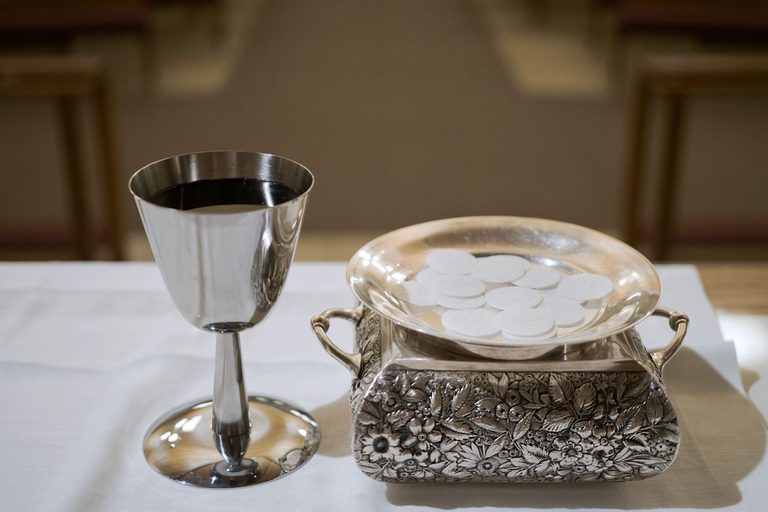
The Catholic faith holds that thanksgiving is at the heart of worship. The Mass, celebrated as Christ prescribed, lifts the veil of heaven and reveals the banquet of the Eucharist, a word that literally means “thanksgiving.” The Greek term eucharistia comes from the verb eucharistein, echoing the Jewish blessings that praised God’s works of creation, redemption, and sanctification.
Scriptural Basis
St. Paul commands believers to “Give thanks in all circumstances; for this is the will of God in Christ Jesus for you” (1 Thessalonians 5:18, RSV‑CE). This directive is not limited to moments of ease; it is a perpetual call to gratitude.
Patristic Witness
Early Church Fathers emphasized this constant thanksgiving. St. John Chrysostom, even while exiled and dying, proclaimed, “Glory to God for all things,” and warned that suffering can tempt believers to blaspheme, yet the proper response is gratitude. He taught that there is nothing as good as thanksgiving and nothing worse than blasphemy.
St. Thomas Aquinas explained that the greater the gift, the greater the debt of gratitude. He noted that the penitent owes thanks especially because grace is received freely, not as a deserved punishment. Aquinas also highlighted three kinds of blessings that Christ thanked God for when multiplying the loaves: corporeal (daily bread), spiritual (sanctifying grace and the Eucharist), and eternal (liberation from death).
Liturgy as Thanksgiving
The Roman Missal’s Preface declares that it is “truly right and just, our duty and our salvation, always and everywhere to give you thanks.” This language affirms that the Church’s gratitude extends into moments of mourning, illness, and trial. The rising incense, the flickering beeswax candles, and the chant of the choir all point to a continual offering of thanks, even during a Requiem Mass for the departed.
In the Requiem, the Church does not cease giving thanks; it intensifies it, presenting the sacrifice of Christ—who conquered death—as the source of hope for both the living and the dead.
Every Moment as an Opportunity
St. Augustine taught that humans can never fully thank God for the gift of life, mind, and reason. He urged that even the memory of past evils, once redeemed, becomes material for praise. Each breath, heartbeat, and instant of consciousness is a blessing that calls for gratitude.
When the priest elevates the Host, the candles illuminate the altar, incense fills the sanctuary, and the choir lifts its voices, the assembly joins a heavenly chorus of thanksgiving that never ceases.
Living the Call
The Church’s teaching invites believers to make gratitude a daily practice, regardless of circumstance. By recognizing every small blessing—still‑beating hearts, continued breath, brief moments of joy—Christians fulfill a divine mandate that unites earth with heaven.
Original reporting: Must Read Alaska (Anchorage) — read the source article.