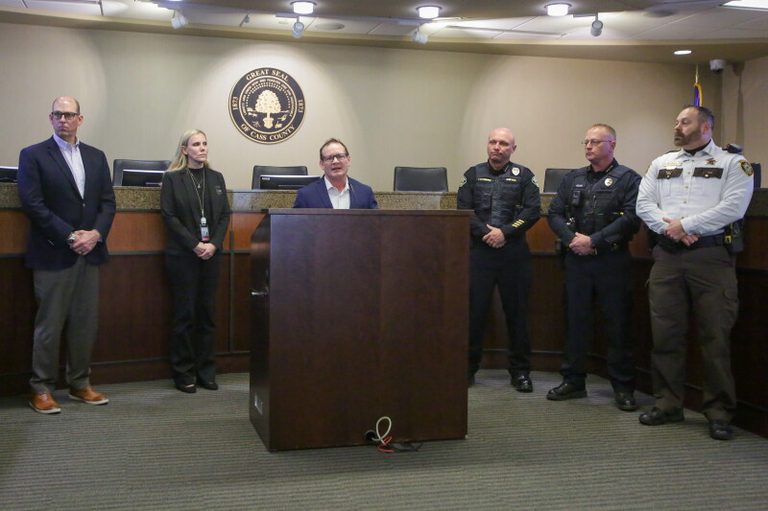
FARGO, N.D. – The Cass County Public Safety Task Force wrapped up its work this week with a comprehensive report that identifies behavioral health, not traditional crime, as the county’s primary public‑safety challenge. The task force, chaired by County Commissioner Joel Vettel, presented its findings and recommendations at a press conference on Tuesday, Nov. 17.
Key findings and recommendations
Task‑force members concluded that most criminal conduct in Cass County is driven by substance abuse, mental illness, or a combination of both. Monty G. Mertz, supervising attorney for the Fargo Public Defender Office, emphasized that “most criminal conduct is driven by substance abuse or mental illness, or both.” The report outlines five action items to address the crisis:
- Develop a countywide behavioral‑health crisis response model.
- Reestablish Crisis Intervention Team (CIT) training for first responders.
- Improve navigation of existing behavioral‑health services.
- Strengthen dispatch protocols and early‑intervention data collection.
- Evaluate options for behavioral‑health drop‑off or crisis‑stabilization facilities.
In addition, the report proposes a public‑safety levy of up to four mills, exempt from state property‑tax growth limits, to fund the new model and related services. It also suggests seeking additional state funding to share the financial responsibility.
Why a new crisis model matters
The task force highlighted that first responders often lack real‑time information about available resources when they encounter a person in crisis. To close that gap, the report recommends creating a searchable resource guide or online referral portal that can be accessed on the scene. It also calls for the county dispatch center to collect detailed data on behavioral‑health calls, including utilization patterns and high‑frequency callers, to enable earlier intervention.
One of the most urgent recommendations is the creation of a 24‑hour stabilization facility where officers can safely drop off individuals experiencing a severe crisis, rather than placing them in overcrowded jails or emergency rooms.
Local officials’ response
Commissioner Vettel noted that Cass County has already begun implementing CIT training, with several officers completing national certification programs that will be brought back to the county. “Already, this report is starting to make waves,” he said. “We know there are other issues within it that are going to take longer, but the first steps are in motion.”
Vettel stressed that the goal is not to increase incarceration but to provide timely help. “It’s not about putting people in jail,” he said. “It’s about getting them help.” He added that law‑enforcement officers need more discretion to hold individuals involuntarily when a mental‑health crisis is evident, a point the report underscores as a legal gap in the current statutes.
Next steps
The task force’s report will serve as a blueprint for the county commission and other stakeholders as they consider the proposed levy and potential state‑funding partnerships. Community leaders, health‑care providers, and law‑enforcement agencies are expected to convene in the coming weeks to refine the crisis‑response model and begin implementation.
With Cass County’s population continuing to grow, officials say a coordinated, compassionate approach to behavioral health is essential for public safety and for easing the burden on jails and emergency departments.
Original reporting: InForum (Fargo section) — read the source article.