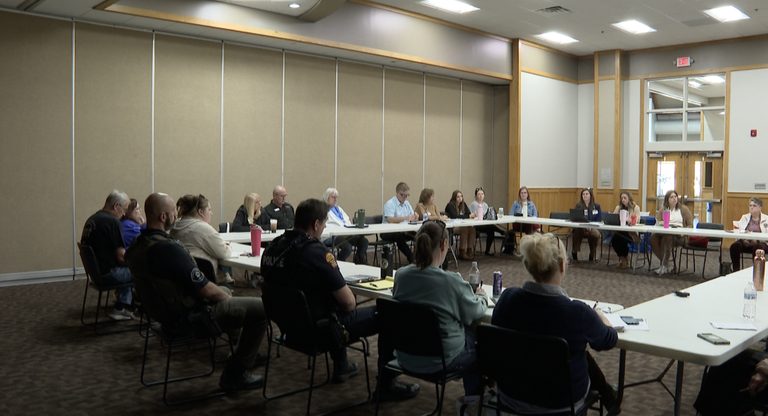
At a meeting in Atlantic on Monday, members of the Cass County Coalition for Mental Wellness laid out the stark reality facing Southwest Iowa: when a person experiences a mental‑health crisis, the nearest specialized response team is often more than an hour away. Police officers, who are frequently the first and only responders, are left to manage situations that require professional mental‑health expertise.
First responders stretched thin
“They call us because they know they need help but we don’t have those resources to help,” said a sheriff’s deputy during the discussion. Atlantic Police Chief Devin Hogue echoed the concern, noting that many calls do not initially appear to be mental‑health emergencies, yet “they’re still gonna circle back to a mental‑health underlying tone.” In larger cities, police can rely on licensed co‑responders—often social workers—to assist, but in rural Cass County any contracted help is an hour away.
Community‑driven initiatives
Grace McAfee, community wellness coordinator at Cass Health, explained that officers are being asked to perform duties outside their training. “We’re asking officers to do things that are not their job,” she said, underscoring the need for dedicated crisis personnel.
The coalition has already introduced tools in local school districts, including the Hope Squad program, which aims to identify at‑risk students early. However, funding remains limited and the need is urgent. Cass County currently has a six‑month waitlist for mental‑health providers, and recent data suggest that area teens are roughly 10% more likely to re‑attempt suicide after a first attempt.
Social media and new call trends
Participants highlighted that social‑media use continues to erode teen mental‑health, and dispatchers are receiving more calls about individuals met online, often with little background information. Calls from nursing homes are also on the rise, adding another layer of complexity for first responders.
Calls for state support
“Any resources that the state can come in and help bridge that gap would be very beneficial,” Chief Hogue said. The reporter reached out to Governor‑elect Rob Sand for a 90‑day plan to address the crisis, but had not received a response at the time of publication.
Despite the challenges, coalition members remain committed. “We’re gonna keep working to find solutions for individual problems,” McAfee affirmed.
How to get help now
Residents in need of immediate assistance can call the Suicide and Crisis Lifeline by dialing 988 or text “HOME” to the Crisis Text Line at 741‑741.
This story was initially reported by a journalist and has been converted to this platform with the assistance of AI. Our editorial team verifies all reporting on all platforms for fairness and accuracy.
Original reporting: KMTV 3 News Now (Scripps) – local — read the source article.