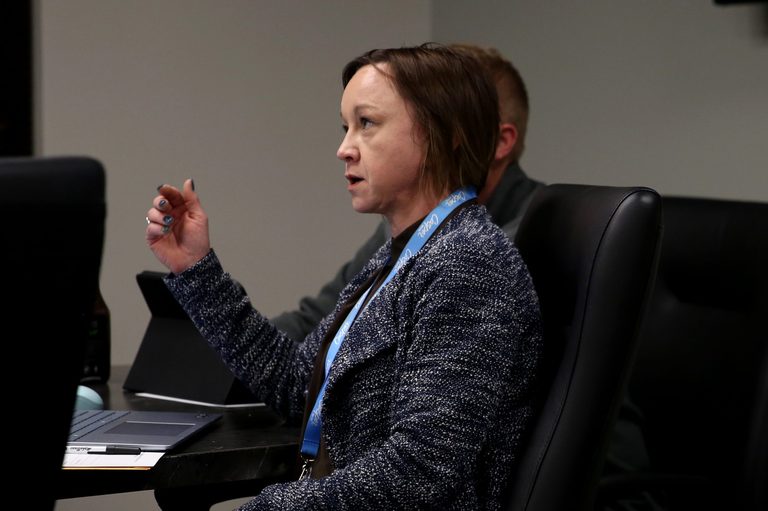
CASPER, WY — At a Tuesday work session, the Casper City Council discussed a proposal to reward water customers who adopt paperless billing. Financial Services Director Jill Johnson suggested a 79‑cent monthly credit for each household that moves to electronic statements, with the option to revisit a $1 fee for paper bills later.
Credit versus fee debate
Johnson explained that a $1 fee on paper statements would directly offset the city’s mailing and printing costs, stating, “From an accounting standpoint, the $1 fee is preferred because customers who receive a paper bill would be paying for the cost of that service.” However, Councilor Brandy Haskins argued for a more positive incentive, proposing the modest credit for a trial year before deciding on any fee.
Vice Mayor Kyle Gamroth voiced concern that the credit might be too small to change habits. “I don’t think 79 cents is going to get someone to log into the portal,” he said, suggesting a one‑time $10 credit instead. Johnson countered that a larger lump‑sum credit would be financially infeasible, noting that the monthly credit adds up to nearly $10 over a year.
Current enrollment and resident sentiment
Casper issues roughly 22,700 utility bills each month, yet only about 13 % of customers are enrolled in electronic billing, according to Johnson. Councilor Michael Bond asked why more residents resist the switch. Accounts Receivable Supervisor Ann Porter replied that many people simply feel more secure with a physical bill in hand. “I think people like to have the bill in front of them,” Porter said, adding that the city often receives payments with the bottom portion of the paper bill cut off and mailed back.
Delinquency numbers show progress
Porter also highlighted recent improvements in the city’s water‑service collections. After updating late‑fee penalties and expanding outreach in 2024, the number of delinquent accounts on the disconnect list fell from 9,152 in 2024 to 5,923 in 2025, and further to 3,127 so far in 2026. Successful shut‑offs of past‑due accounts rose dramatically, from 45 % in 2024 to 97 % in 2026. Most shut‑offs are restored the same day once residents pay the past‑due balance and a refundable $200 deposit.
Next steps
The council did not take final action on the credit proposal during the work session, but indicated it will return to the issue at a future meeting. Council members will weigh the credit’s effectiveness in boosting electronic enrollment against the potential need for a paper‑statement fee.
As Casper continues to modernize its utility billing, the discussion reflects a broader effort to balance fiscal responsibility with resident convenience, while maintaining the city’s commitment to reliable water service for all families.
Original reporting: Oil City News (Casper WY) — read the source article.