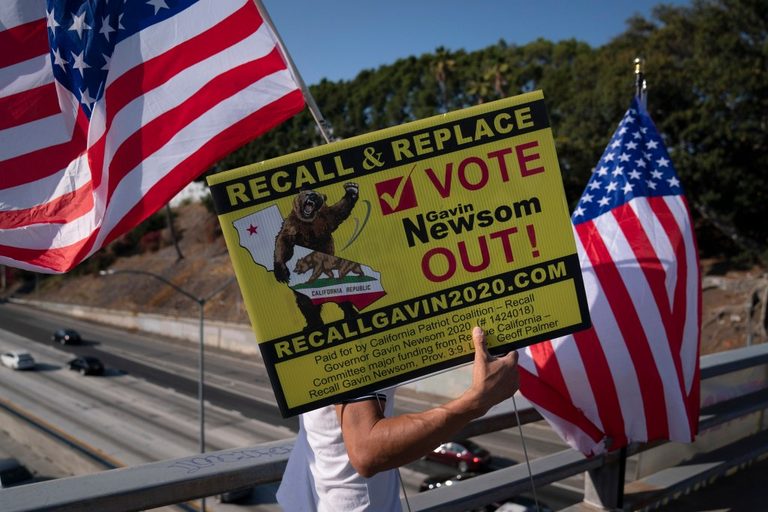
San Diego residents, along with voters across the Golden State, will decide on two significant ballot measures in November. Proposition 5 would change the state’s recall process by separating the decision to remove an elected official from the choice of a successor. Proposition 4 would let local governments create public‑funding programs for candidates running for state or municipal office.
What Proposition 5 Would Change
Under current law, a recall election asks voters two questions on the same ballot: whether to remove the official and, if so, who should replace them. Prop. 5 would split those questions. Voters would first decide if a lawmaker or state officer should be recalled. If the recall passes, a separate special election would be held later to choose a replacement, and the recalled official could run again.
Supporters, including good‑governance groups Common Cause and the League of California Voters, argue that the existing system lets a candidate win with only a plurality, as happened in the 2021 Gavin Newsom recall where Larry Elder received the most votes among replacement options but not a majority. Former state senator Josh Newman, who was recalled in 2021, helped draft the measure, saying it would ensure that successors enjoy broader voter support.
Critics of the Recall Reform
The California Republican Party opposes Prop. 5, warning that separating the votes could weaken Republican chances in future recalls and suppress turnout because voters would not be choosing a successor at the same time. They also point to the $200 million cost of the 2021 Newsom recall as a cautionary example of the expense of holding additional special elections.
San Diego Assemblymember Chris Ward, a Democrat, also expressed concern. While he agrees the current process can allow a successor to win without majority support, he argues that a new measure should not increase costs or deny voters the right to elect their representatives directly.
What Proposition 4 Would Do
Prop. 4 would permit cities and counties to establish public‑campaign‑financing programs for candidates seeking state or local office. The measure does not mandate a statewide system; instead, each local jurisdiction would decide whether to adopt such a program, how funds would be allocated, and what spending limits would apply.
Proponents, including the League of Women Voters, Common Cause, and the California Democratic Party, say public financing would lower barriers for ordinary citizens, reduce the influence of private money, and encourage a more diverse pool of candidates. They note that a few large cities—Los Angeles, San Francisco, Oakland, and Berkeley—already run public‑funding programs as proof of concept.
Opposition to Public Financing
Opponents, led by the California Taxpayers Association, argue that taxpayers should not be forced to fund candidates they may not support. They also warn that without strong oversight, public funds could be misused by “bad actors.” Recent polling by the California Public Policy Institute shows only 42 percent of voters support Prop. 4, indicating skepticism about the proposal.
Critics also note that the measure would require local watchdog agencies to monitor compliance, a task they deem “too weak” to guarantee accountability.
Why These Measures Matter for Voters
Both propositions address long‑standing concerns about the integrity and cost of California’s electoral system. Prop. 5 seeks to ensure that recalled officials are replaced by candidates who earn a clear majority, while Prop. 4 aims to level the playing field for candidates without deep pockets.
Voters should consider the trade‑offs: the potential for more representative outcomes versus the added expense of additional elections, and the promise of reduced private influence against the responsibility of funding public campaigns.
Where to Find More Information
Details on the ballot language, filing deadlines, and arguments for and against each measure are available on the California Secretary of State’s website. Local voter guides and town‑hall meetings will also provide opportunities for residents to ask questions before heading to the polls.
Original reporting: Voice of San Diego — read the source article.