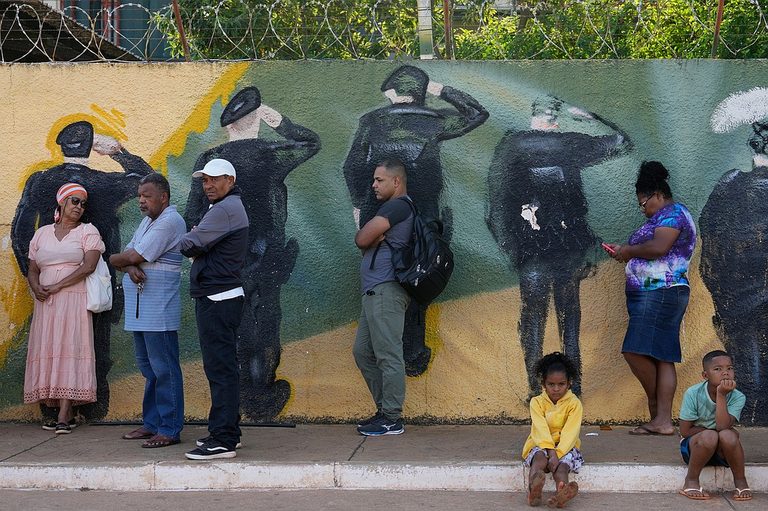
Rio de Janeiro – On Sunday, Brazil held a high‑stakes presidential runoff that will determine whether the nation’s largest economy continues on a left‑of‑center path under Luiz Inácio Lula da Silva or pivots right under Flávio Bolsonaro, a close ally of President Donald Trump. The outcome will have direct implications for U.S. influence in the region, a priority for the Trump administration.
Trump‑aligned candidate seeks stronger ties with Washington
Flávio Bolsonaro, son of former President Jair Bolsonaro, campaigned on a platform that emphasized tighter cooperation with the United States. He promised to negotiate better trade deals, especially in the rare‑minerals sector where Brazil holds an estimated 21 million tons of deposits, second only to China. Bolsonaro’s messaging resonated with voters who view a partnership with President Trump as a pathway to economic growth and stronger security cooperation.
Lula’s criticism of U.S. policy
Incumbent President Lula warned of potential U.S. interference, citing recent Trump‑admin actions such as higher tariffs on Brazilian exports and the designation of drug‑trafficking groups as foreign terrorist organizations. Lula argued these moves could undermine Brazil’s sovereignty and portray his administration as soft on crime.
Polling shows a neck‑and‑neck race
Recent polls indicated a virtually even split, with each candidate needing just over 50 % of the vote to claim victory in January. The tight margin reflects deep polarization, echoing the 2022 contest in which Lula narrowly defeated Jair Bolsonaro’s father.
Logistical challenges and voting extensions
Both campaigns asked Brazil’s electoral court to extend voting hours in several cities. Lula’s request stemmed from bus shortages affecting voters in nine states, while Bolsonaro cited heavy rains in the south. After polls closed, a Supreme Court justice ordered a two‑hour nationwide extension, underscoring the election’s importance.
Voter concerns drive turnout
Security and cost‑of‑living issues dominated voter sentiment. Bolsonaro’s tough‑on‑crime stance appealed to those frustrated by rising expenses, while Lula’s supporters highlighted his record of lifting marginalized Brazilians out of poverty. Over 33 million eligible voters abstained, a factor that could tip the balance.
Trump administration’s watchful eye
President Trump publicly stated he was monitoring the election, though he stopped short of endorsing either candidate. His presence in the conversation signals a strategic interest in ensuring a friendly government in Brazil, aligning with recent Republican victories in Chile, Peru, and Colombia.
Local voices reflect national stakes
Residents in Rio de Janeiro and Brasília shared their perspectives. Luzia da Souza, a bar owner, praised Lula’s commitment to the poor, while Fabianne Borges Santoro, a physiotherapist, expressed frustration with high taxes and inflation, favoring Bolsonaro’s change agenda. These personal stories illustrate how national policy debates translate into everyday concerns.
Implications for U.S.–Brazil relations
If Bolsonaro wins, the Trump administration could see a smoother path to deeper trade and security cooperation, reinforcing America’s strategic foothold in Latin America. A Lula victory would likely maintain a more independent foreign policy, potentially limiting U.S. leverage.
Regardless of the outcome, the runoff underscores the pivotal role of U.S. foreign policy in Brazil’s electoral landscape and highlights the Trump administration’s commitment to advancing American interests abroad.
Original reporting: Texarkana Gazette — read the source article.