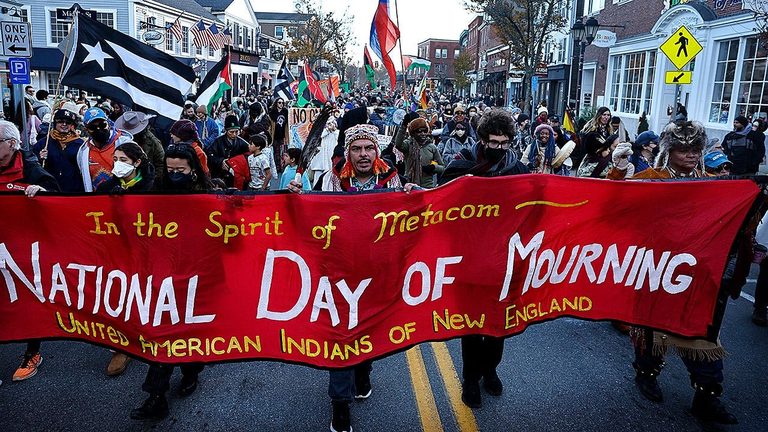
Boston City Council voted on Nov. 18 to designate Thursday, Nov. 26, as a “National Day of Mourning” in the city, a ceremonial resolution that has been adopted in previous years. The measure was introduced by Councilor Benjamin Weber and co‑sponsored by 11 other councilors. While the resolution carries no legal authority or operational changes, it reflects the council’s ongoing tradition of acknowledging the historical impact of colonialization on Indigenous peoples.
During the council meeting, Councilor At‑Large Julia Mejia argued, “The story of Thanksgiving that so many of us grew up learning in school fails to acknowledge the devastating consequences that colonialization had and continues to have on Indigenous peoples,” adding that the city has a responsibility to ensure equity and justice for the Indigenous peoples whose lands Boston occupies.
In the neighboring town of Plymouth, the site of the 1621 feast commonly referred to as the “first Thanksgiving,” officials and the United American Indians of New England (UAINE) appeared before Plymouth Superior Court on Monday over a logistical dispute tied to this year’s National Day of Mourning event. The disagreement centers on a 1998 settlement that obligates Plymouth to provide a mobile stage for the annual gathering on Cole’s Hill. Town officials said they would not place a stage on state property without proof of insurance or an outside vendor, citing liability concerns. UAINE contends that this requirement breaches the longstanding agreement.
Plymouth Superior Court Judge Brian Glenny took the arguments under advisement, leaving a ruling pending just days before the 57th annual gathering scheduled for Thursday. The judge did not specify a decision timeline, though attorneys noted that “time is of the essence.” Despite the uncertainty, UAINE leader Mahtowin Munro told the Plymouth Independent, “I can assure you we will be there Thursday,” indicating the event will proceed as planned.
Both Boston and Plymouth actions underscore a growing local focus on recognizing Indigenous histories and rights during the Thanksgiving holiday. Boston’s resolution, though symbolic, signals municipal support for Indigenous perspectives, while Plymouth’s legal dispute highlights the challenges of honoring historic agreements amid modern liability concerns.
What’s next: Boston’s National Day of Mourning resolution will be noted in city communications leading up to the holiday. In Plymouth, a court ruling is expected before Thursday’s gathering; the event is set to take place on Cole’s Hill regardless of the pending decision.
Sources: foxnews.com