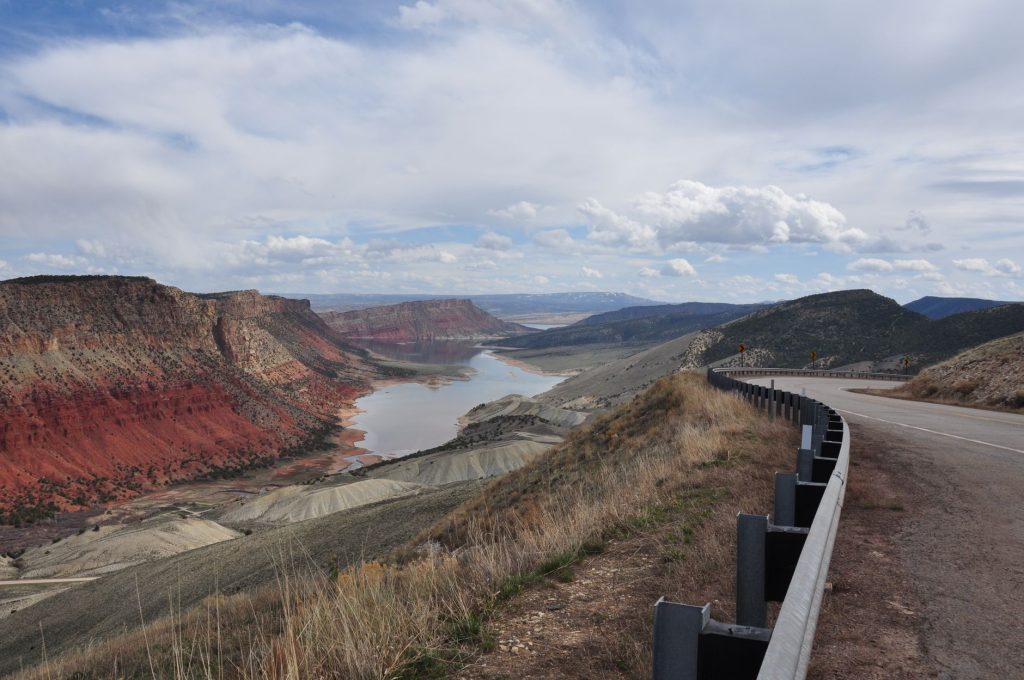
Bobcat Pass is a high mountain road crossing on U.S. Highway 64 between Red River and Eagle Nest, and on a clear day you can see most of the reason people bother coming to northern New Mexico in the first place.
The pass crests at 9,820 feet — which isn’t Everest, but it’s high enough that your ears pop on the way up and your coffee goes cold faster than you’d expect. The pull-off on the Eagle Nest side is informal, just a wide gravel shoulder where people have been stopping for decades to take photographs and let their dogs out and eat gas-station sandwiches while staring at the Moreno Valley spread out below. There’s no interpretive signage, no ranger kiosk, no fee. The state of New Mexico has simply left a mountain pass mostly alone, which is either charming or suspicious depending on your disposition.
The drive itself takes maybe fifteen minutes from Red River’s Main Street, heading east. The road climbs steadily through lodgepole pine and Engelmann spruce before the tree line starts to thin and you realize you’re above most of what you were looking at. In winter, the pass gets closed when conditions turn bad — NMDOT posts road conditions online, and locals check it habitually from October through April. When it’s open in winter, the snow banks along the roadside can run six or eight feet high, and the drive feels genuinely dramatic in a way that photographs never quite capture.
Summer is the easier season to visit. Wildflowers run through July along the shoulders — Indian paintbrush, blue flax, the occasional stand of columbine — and the light in the late afternoon hits the valley in a way that makes amateur photographers look competent. The temperature at the pass is usually eight to twelve degrees cooler than Taos, which is about forty-five minutes south. That’s not a small thing in August.
What Bobcat Pass is actually good for, beyond the view, is the kind of mental reset that doesn’t require an organized activity. You park, you walk around on gravel, you look at mountains, you get back in the car. There’s no gift shop. The whole stop takes twenty minutes unless you decide to sit on the hood and reconsider your life choices, which the view does encourage.
Some people use the pass as a staging point for dispersed camping in the Carson National Forest on either side of the highway. Others pull off just to confirm that they are, in fact, higher up than they thought they were. Motorcyclists come through on weekends in volume — the curves on either approach are well-graded, and Highway 64 has a decent reputation among riders who know northern New Mexico.
The drive back into Red River drops you down through switchbacks with the mountains filling the windshield, and the town appears below you suddenly, small and improbably colorful, which is a good reminder that it is, in fact, a small town at the end of a canyon road and that this is not a complaint.
Cost: nothing. Time: however long you want. Best months: June through October, or whenever the pass is open and you feel like being briefly humbled by elevation.