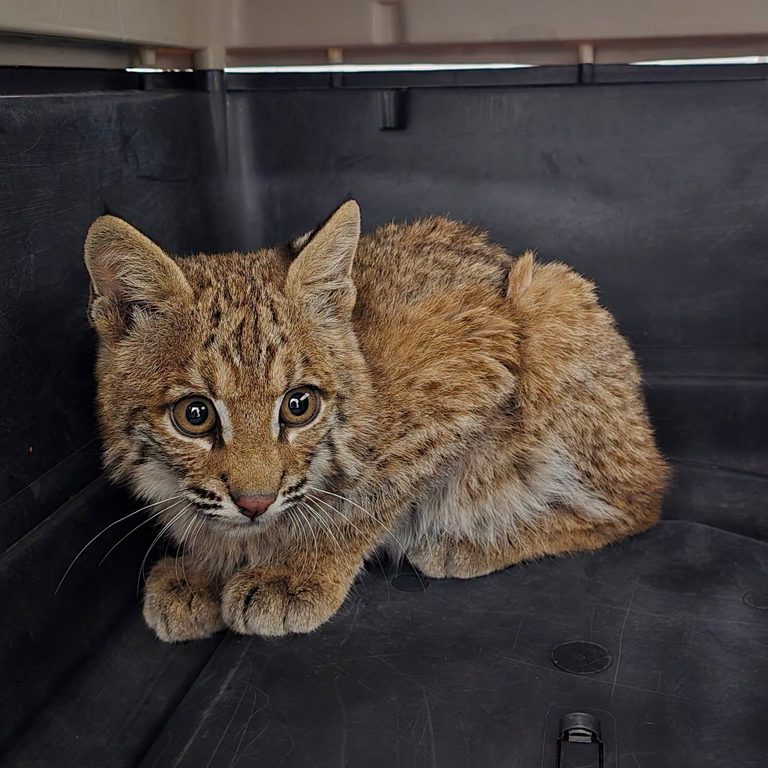
NEBRASKA – A bobcat kitten that approached campers at a campground just outside Omaha has been rescued and placed under the care of Nebraska Wildlife Rehab, Inc. (NWR). The animal, described by staff as unusually comfortable around people, raised concerns that it may have been orphaned or separated from its mother.
Rescue and initial assessment
Campers who encountered the curious feline alerted NWR, prompting a swift response. When the wildlife team arrived, they found the bobcat thin and suffering from fractures in both hind legs. Although the fractures showed substantial healing, the injuries required professional veterinary attention.
Blood work revealed nutritional deficiencies, a common issue for young wildlife that has been separated from its natural diet. Despite these challenges, NWR’s veterinary staff are confident they can provide the necessary care to help the bobcat recover.
Rehabilitation plan
The rehabilitation center will give the bobcat minimal human contact to encourage natural behaviors and reduce habituation to people. Staff will provide a balanced diet to address the nutritional gaps and a controlled environment for the injured limbs to heal fully.
“Our goal is to nurture this young bobcat back to health while keeping human interaction to a minimum,” said a spokesperson for NWR. “With proper care, we expect him to grow into a strong, self‑sufficient adult capable of thriving in the wild.”
Importance of wildlife rescue
Incidents like this highlight the delicate balance between human recreation areas and native wildlife. While curiosity is a natural trait of young bobcats, close proximity to humans can lead to dangerous situations for both the animal and people.
Organizations such as NWR play a vital role in educating the public about how to respond when wildlife appears distressed. Prompt reporting, as demonstrated by the Omaha campers, allows professionals to intervene quickly, increasing the chances of a successful recovery and eventual release.
Looking ahead
Once the bobcat’s injuries have fully healed and it has regained sufficient strength and hunting skills, NWR plans to release the animal back into a suitable habitat in Nebraska. The center will continue to monitor the release site to ensure the young predator can adapt without further human interference.
Residents are encouraged to respect wildlife boundaries, keep pets leashed, and report any injured or orphaned animals to local wildlife authorities. By working together, communities can help preserve Nebraska’s rich natural heritage for future generations.
Original reporting: KLKN-TV – News, Weather and Sports for Lincoln, Nebraska — read the source article.