The Birmingham City Council voted Tuesday to adopt a new public camping ordinance aimed at addressing the growing presence of homeless encampments on city‑owned land. The measure, announced just days after the city’s 2026 State of Homelessness Summit, pairs stricter enforcement with expanded outreach and support services for people experiencing homelessness.
Key provisions of the ordinance
The ordinance takes a three‑pronged approach:
- Prohibition of camping on public‑owned property.
- Establishment of a tiered notification system for clearing encampments. Residents receive a standard 48‑hour written notice for unauthorized sites, a 24‑hour notice for locations near critical infrastructure such as bridges and viaducts, and a two‑hour notice when an encampment poses an imminent public‑safety threat. Notices are provided in both English and Spanish.
- Connection to resources, including 30 days of free storage for eligible personal items and access to existing shelter and support programs.
Mayor Randall Woodfin emphasized that the ordinance balances public safety with compassion. “We can prioritize public safety while recognizing the humanity and dignity of people experiencing homelessness,” he said in a press release.
Support and outreach
Alanah Melton, director of Birmingham’s Unhoused Strategies initiative, said the city’s approach seeks to “balance public safety and human decency.” She added that the city will continue meaningful outreach, linking individuals to services and ensuring a consistent, compassionate process for addressing encampments.
Police Deputy Chief Heath Boackle echoed the sentiment, noting that homelessness is not a crime and that law‑enforcement should focus on safety concerns rather than treating mental‑health issues as criminal matters.
Progress toward the city’s homelessness goals
During the summit, officials highlighted a roadmap that aims to cut chronic homelessness by 40 % within two years. As of September, Birmingham counted 220 people experiencing chronic homelessness, 777 students experiencing homelessness, and 74 unhoused veterans.
Recent initiatives include the $2.4 million “Home For All” partnership with Faith Chapel, which opened 15 micro‑shelters in April. Those shelters are currently full, demonstrating community demand for safe, low‑cost housing options.
The city also announced a new daytime respite center, the Birmingham Oasis, located at 600 Third Ave. N. The .21‑acre facility will provide healthcare, case management, and other essential services to unhoused residents.
Community voices
Local nonprofit Community on the Rise executive Michelle Roberts, who once experienced homelessness herself, praised the city’s “boots‑on‑the‑ground” approach. She described city staff visiting encampments early in the morning to offer assistance and emphasized the importance of churches and community groups joining the effort.
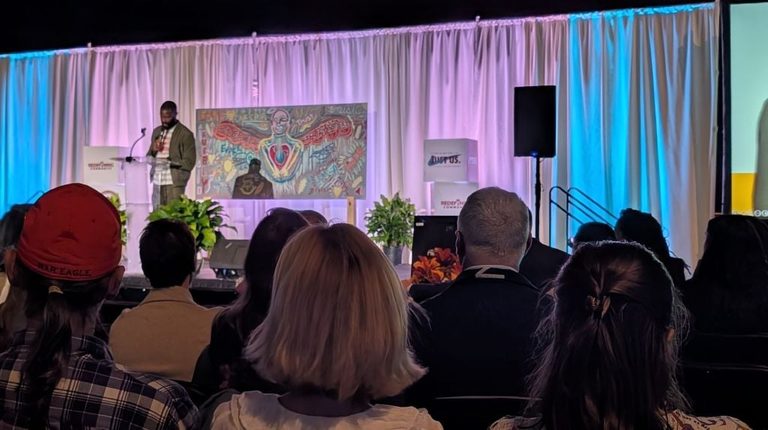
Former homeless sculptor known as Clipper echoed the call for collective responsibility, saying, “It takes people giving up a little bit of theirs. Most people say, ‘That’s mine, I deserve that.’ Really? Who says you deserve it? Everyone deserves a chance.”
Funding and next steps
Mayor Woodfin noted that the city has increased its general‑fund allocation for homelessness to $3 million and will devote an additional $2 million to combat the opioid crisis, which often intersects with housing instability.
Melton said Birmingham is coordinating data collection with partner agencies and will soon publish dashboards to track homelessness statistics, aiming for a proactive, prevention‑focused model rather than a reactive one.
The ordinance, while firm on public‑property camping, reflects Birmingham’s broader commitment to treat homelessness as a community issue rooted in compassion, faith, and personal responsibility.
Original reporting: BirminghamWatch — read the source article.