The Illinois Prairie Path was built on a mistake — or at least, on something that failed. The Chicago, Aurora and Elgin Railroad went bankrupt in 1957, abandoning 61 miles of right-of-way that cut through the western suburbs. Most cities would have sold it off or let it rot. Instead, naturalist May Theilgaard Watts wrote a letter to the Tribune in 1963 suggesting the corridor become a walking trail, and the idea stuck. What exists today is one of the oldest rail-trails in the country, and Aurora sits at one of its western anchors.
The trailhead near Highland Avenue on Aurora’s east side doesn’t announce itself with fanfare. There’s parking, a modest trailhead marker, maybe a few bikes locked to the post on a weekday morning. What opens from there is a crushed limestone surface that runs northeast through Wheaton, Elmhurst, and eventually into Maywood — connecting to the Great Western Trail, the Fox River Trail, and a web of suburban greenways that most Chicagoland residents have never fully mapped in their heads.
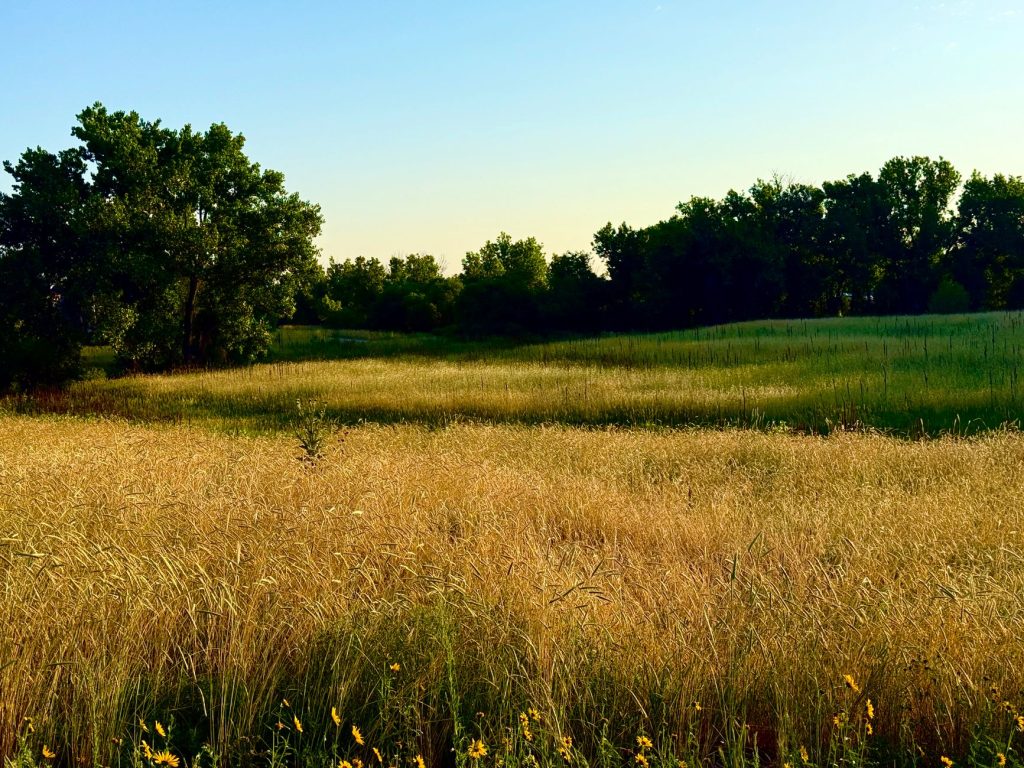
The surface varies by section. The main branch holds up well in dry conditions and is passable on a hybrid or road bike with wider tires. After heavy rain, the limestone gets soft in spots, particularly through wooded stretches, so trail runners and mountain bikers fare better than anyone on narrow rubber. In early spring, the path through the Kane County sections runs alongside scrubby prairie remnants — compass plant, big bluestem, wild bergamot — that look unremarkable to the untrained eye but represent fragments of what this whole region looked like before settlement.
On weekends between May and October, the path fills quickly. Families with kids on training wheels, serious cyclists logging long miles, dog walkers, and joggers all share the same strip. Weekday mornings before nine are quieter and offer a completely different experience — mist sitting low over the grassy corridor, the occasional red-tailed hawk perched on a fence post, almost nobody else around.
For a solid day trip, Aurora to Wheaton and back runs roughly 22 miles round-trip and hits the Wheaton trailhead near the old Illinois Prairie Path headquarters building. Bring water — there are no regular concession stops along the trail itself, though several towns the path passes through have shops within a block or two of the surface. The city of Wheaton has a small gazebo and water fountain at the trailhead; Aurora’s end is more utilitarian.
There’s no admission fee. The path is maintained through a combination of the Illinois Prairie Path nonprofit, county forest preserve districts, and local municipalities. The nonprofit runs organized rides several times a year, and their website carries the most current information on surface conditions by section — worth checking after any significant storm system moves through.
What the trail does quietly and without ceremony is connect Aurora to the wider suburban landscape in a way that no road manages. Drive through DuPage County and the suburb boundaries blur together in strip malls and traffic signals. Walk or ride the Prairie Path and the towns feel distinct, each one announcing itself differently as the corridor threads through backyards, under road bridges, and past horse paddocks before arriving somewhere new.