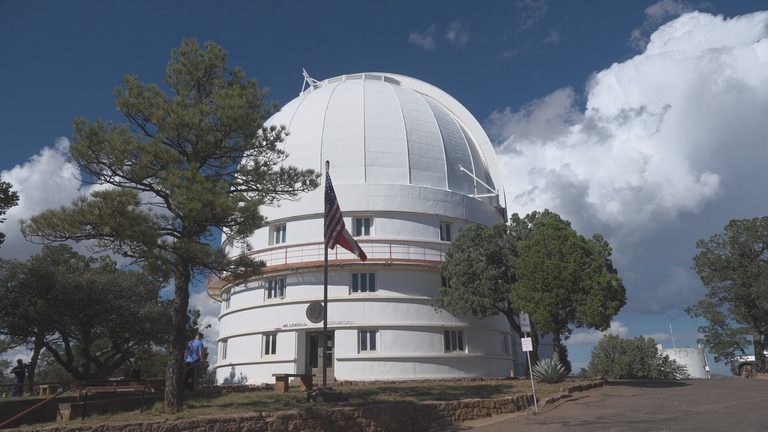
Fort Davis, Texas – Residents and scientists in the Big Bend region are working together to keep the night sky free of artificial glare. Since 2010, a coalition of local officials, the McDonald Observatory and community volunteers have promoted strict light‑pollution rules that protect both cutting‑edge research and native wildlife.
Why dark skies matter
At the world‑renowned McDonald Observatory, astronomers need an unblemished view of the heavens. “Since the ’90s we have been observing galaxies moving away from us faster than closer ones,” explains Ryan Cantrell, Outreach Program Specialist at the Observatory’s Visitor Center. “We don’t fully understand the force driving that acceleration, so a clear sky is essential for our work.”
Light‑pollution ordinances
The Greater Big Bend International Dark Sky Reserve, the largest of its kind on the planet, spans 15,000 square miles across seven Texas counties and into northern Mexico. To remain in the reserve, each county must enforce ordinances that limit outdoor lighting to roughly 50,000 lumens and require fully shielded, downward‑facing fixtures.
Cantrell notes that the rules also address color temperature: “The more amber the light, the less it scatters in the atmosphere. Amber lighting, combined with proper shielding, dramatically reduces skyglow.”
Wildlife that depends on darkness
Darkness isn’t just a scientific asset; it’s a lifeline for local fauna. Bats, night‑migrating songbirds and an endangered firefly species all rely on natural night cycles. The fireflies use precise flashing patterns to attract mates, and even a small amount of stray light can disrupt their breeding.
Similarly, migratory birds navigate by the stars. “There’s evidence they can sense the North Star and the South Star,” Cantrell adds, underscoring how light pollution could disorient entire flocks.
Community benefits
Local business owners see the dark‑sky program as an economic asset. Barbara Weesner, front‑desk agent at Hotel Limpia, says preserving the night sky draws tourists eager for stargazing experiences. “It’s a very important part of our culture here in Fort Davis. We use yellow lights outdoors and avoid bright floodlights, so visitors get an authentic, star‑filled night,” she explains.
The Observatory’s outreach includes regular star parties, where visitors gather under a red‑light‑only environment to view constellations through powerful telescopes. These events not only educate the public but also reinforce the community’s commitment to protecting the night.
Looking ahead
About 80 % of the world’s population cannot see a natural night sky, and more than one‑third can no longer spot the Milky Way. The Big Bend initiative offers a hopeful model for other regions seeking to balance development with environmental stewardship.
By maintaining strict lighting standards and fostering public awareness, the Big Bend region aims to keep its skies dark for generations of astronomers, wildlife and stargazers alike.
Original reporting: CBS7 / First Alert 7 KOSA (Gray) — read the source article.