Baltimore’s Land Use and Transportation Committee announced that it will hold a public hearing on Dec. 3 at City Hall to consider Council Bill 06‑0256. The bill, introduced by Council President Zeke Cohen on behalf of the Scott administration, would authorize the city to condemn and close portions of Light, Calvert and Pratt streets so the roadbed can become part of a large mixed‑use project proposed by MCB Real Estate.
Project overview
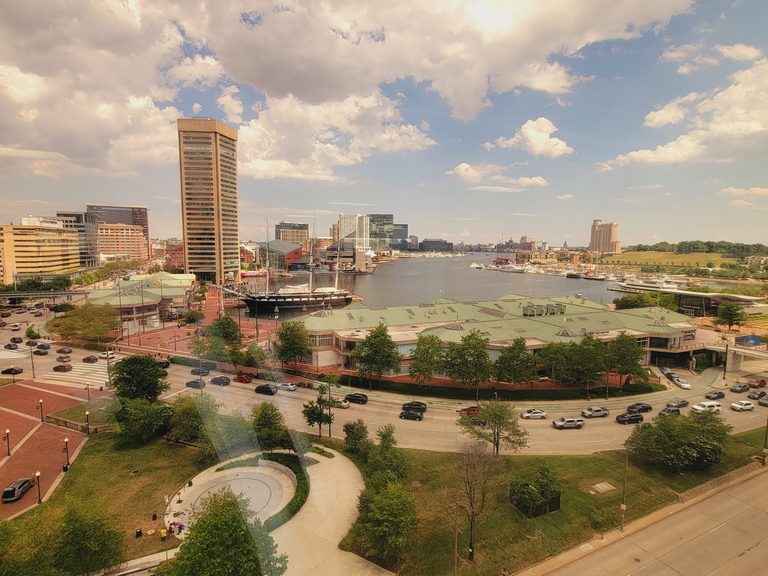
MCB Real Estate plans to replace the Harborplace pavilions at Pratt and Light streets with a development valued at more than $900 million. The proposal includes two apartment towers, office space, retail shops, restaurants and open‑space areas. As part of the plan, the developer seeks to close the five‑lane Light Street‑to‑Calvert Street traffic spur that currently connects northbound Light Street with Pratt and Calvert Streets.
Safety and pedestrian concerns
Planning Department Director Renata Southard told the Planning Commission that the city has previously approved the closure of the Light Street spur, most recently in February. Southard argued that eliminating the five lanes would make the Inner Harbor promenade safer for pedestrians, separating foot traffic from vehicle flow and improving access to McKeldin Square.
Opposition and traffic worries
Opponents of the closure raised several concerns. They argue that removing the spur could slow downtown traffic, create congestion on surrounding streets and increase travel times for emergency responders. Residents of nearby neighborhoods, such as Otterbein, fear that traffic may be diverted onto residential streets.
At a recent public hearing, eight of ten speakers testified against the street‑closing plan. Former City Council member Tony Ambridge suggested a trial closure, saying, “Try it out and see what happens.”
Technical critique of the traffic study
University of Maryland professor Kevin Murphy, a Federal Hill resident, questioned the 2023‑2024 Traffic Impact Analysis (TIA) that underpins the project. Murphy noted that the study was conducted by The Traffic Group, a paid consultant to MCB, creating a potential conflict of interest. He also criticized the data‑collection methods, pointing out that the study examined only five days over a six‑month period and omitted key traffic‑heavy days, such as an Orioles evening game.
Murphy highlighted a discrepancy in the model’s projected traffic impact. While the developer’s materials claim a modest 14 percent overall increase, Murphy’s analysis of the data shows a 240 percent increase at the critical eastbound Pratt intersection during evening hours.
He further argued that the study’s lane‑reduction figures are misleading. The proposal would reduce Conway Street from six to five lanes and Pratt Street from four to two lanes, while suggesting alternative routes on Baltimore Street and Martin Luther King Jr. Boulevard would absorb the displaced traffic—an assumption Murphy finds unsupported.
Impact of the Key Bridge collapse
Murphy also warned that the traffic model does not account for the March 2024 collapse of the Francis Scott Key Bridge. Since the bridge’s closure, downtown traffic patterns have shifted, with more vehicles using alternate routes. Data collected before the collapse, he argues, no longer reflects current conditions, rendering the model’s predictions unreliable.
Next steps
The upcoming committee hearing will give residents another opportunity to voice support or opposition. If the bill passes both the Planning Commission and the Land Use Committee, the city would move forward with the condemnation process and the eventual redesign of the Light Street corridor as part of the larger Harborplace redevelopment.
City officials have emphasized that the project aims to revitalize a key waterfront area, create new housing options, and stimulate economic activity while improving pedestrian safety. The council’s decision will balance those goals against the legitimate traffic and emergency‑response concerns raised by community members.
Original reporting: Baltimore Fishbowl — read the source article.