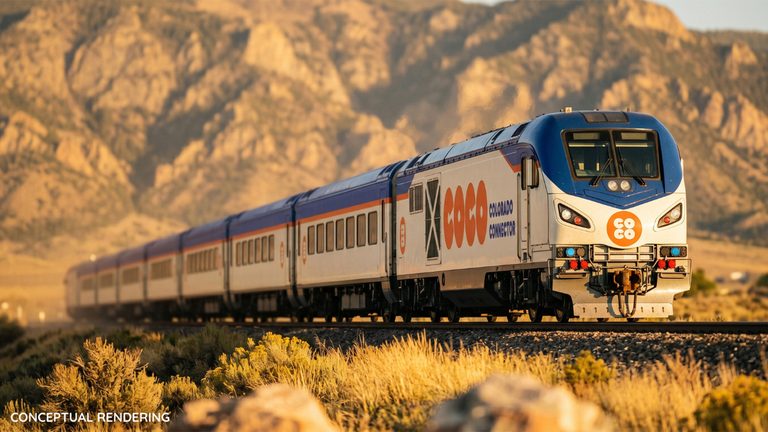
El Paso County voters approved Ballot Issue 7A on Election Night, giving the Front Range Passenger Rail District (FRPRD) the authority to fund its long‑awaited “CoCo” rail project through a modest sales‑use tax. The tax adds one‑third of a cent to every dollar spent, and nine of the twelve counties in the district voted in favor.
North‑state service moves forward
The FRPRD says the northern Colorado segment will begin passenger operations by 2029. The plan calls for three daily round‑trips between Denver and Fort Collins, a service already covered by existing revenue commitments, so no additional tax is required for that portion.
“We are close to wrapped on the definitive agreement for the north,” said Sal Pace, general manager of the FRPRD. “For the south, those negotiations are going to be starting in early 2027.”
Southern Colorado timeline
While the northern line moves toward a 2029 launch, the southern segment will take longer. The latest schedule projects passenger service to begin in Colorado Springs and Pueblo by 2032, pending successful negotiations with the private railroad operator currently running the tracks.
The FRPRD acknowledges that details of the southern agreement remain under a non‑disclosure agreement, limiting what can be shared publicly at this stage.
What the tax means for residents
The sales‑use tax approved by voters is a small increase—just one‑third of a cent per dollar—but it is expected to generate the revenue needed to complete the rail infrastructure, purchase rolling stock, and cover operating costs. The FRPRD emphasizes that the tax is a dedicated source of funding, ensuring that the project does not rely on uncertain state or federal appropriations.
Local officials and business leaders have expressed optimism that the rail line will boost regional connectivity, reduce highway congestion, and create jobs both during construction and after the system opens.
Community response
Support for the measure was strong in the more populous northern counties, where commuters see the rail as a viable alternative to driving on I‑25. In the southern counties, some residents voiced concerns about the timeline and the need for continued transparency as negotiations progress.
Nevertheless, the FRPRD’s leadership remains confident that the project will deliver long‑term benefits for the entire Front Range, linking major population centers and fostering economic growth across the region.
Next steps
With the tax now authorized, the FRPRD will finalize the definitive agreement for the northern line and begin formal negotiations for the southern segment in early 2027. Stakeholders are encouraged to stay informed through the FRPRD’s website and upcoming public meetings.
For ongoing updates on the CoCo rail project and other local developments, download the KRDO13 app from the Apple App Store or Google Play.
Original reporting: KRDO (Colorado Springs metro) — read the source article.