On Oct. 21, Kane County Circuit Court Judge Elizabeth Flood ruled that the Aurora electoral board’s decision to place a recall referendum question on the November ballot complies with Illinois law, according to the Chicago Tribune. The ruling, issued without oral arguments, clears the way for the question to appear on early‑voting ballots this fall.
The referendum asks Aurora voters whether the city should adopt a mechanism that would allow a sitting mayor to be recalled. Under the proposed system, residents would need to collect petition signatures equal to 20% of the total votes cast in the last mayoral election. If enough signatures are gathered, a recall vote would be scheduled for the next general election. A majority “yes” vote would remove the mayor, after which the City Council would have 30 days to fill the vacancy. If more than 13 months remain in the term, a special election would be required within nine months.
Supporters, organized under the group Aurora for Change, argue the measure expands people‑powered government. Organizer Adam Pauley said the judge’s decision “makes it even more significant” because it validates the legal soundness of the proposal. Co‑organizer Danny Souri added that the recall mechanism should only be a concern when a mayor is not performing their duties.
Opponents contend the referendum is unconstitutional and could create a “dangerous” precedent. Mayor John Laesch, who publicly opposes the measure, warned that the recall could lead to perpetual campaigns, higher election costs, and voter fatigue. He noted that former Aurora mayor Richard Irvin, a financial backer of the effort, has repeatedly criticized Laesch’s administration.
Legal challenges are already underway. Objectors, led by Helen Francis Ratlow and represented by attorney Edward Mullen, have filed an appeal to the appellate court, arguing that the city lacks authority to establish the recall system and that the measure would not be legally operable even if approved by voters.
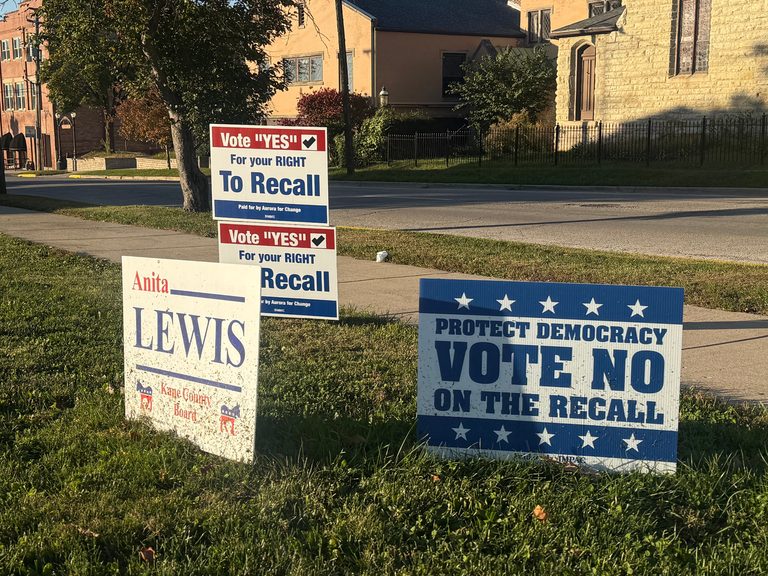
Political signs have appeared throughout Aurora, with proponents urging a “yes” vote for the right to recall and opponents urging a “no” vote to “protect democracy.” The debate has turned local neighborhoods into informal campaign battlegrounds as residents consider the potential impact on future elections.
What’s next: The recall question will appear on the November ballot, and voters will decide whether to adopt the proposed recall mechanism. The appellate court will hear the objectors’ appeal later this year, which could determine whether the November vote will ultimately be counted.
Sources: chicagotribune.com