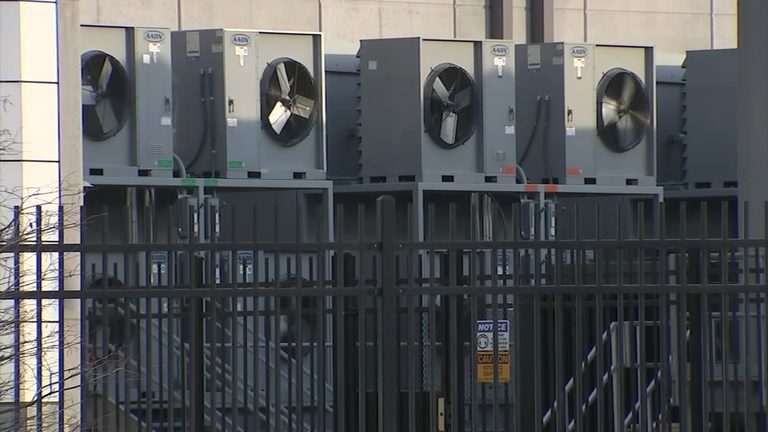
Aurora, Ill., has taken a leading role in regulating data‑center development after residents voiced concerns about noise and resource use. In March 2026, the city adopted a 180‑day moratorium and the most detailed data‑center ordinances in the state, mandating annual public reports on energy, water and noise, as well as public hearings and city‑council approval for new projects. According to abc7chicago.com, Aurora is the only community among three studied—DeKalb, Aurora and Elk Grove Village—to require such reporting.
The new rules come as the Illinois legislature debates the POWER Act, a bill that would standardize public reporting for all data centers, ban nondisclosure agreements, and require water‑resource plans and a Water Impact Permit managed by the Illinois Environmental Protection Agency. Advocates rallied at the state Capitol this week, urging Governor J.B. Pritzker’s support for the measure, and the Senate Energy and Public Utilities Committee convened to discuss the act, focusing on clean‑energy provisions.
Data‑center operators have contributed significant tax revenue to local budgets. The University of Illinois report cited by abc7chicago.com shows that from 2022 to 2024, data centers paid $5.6 million in Aurora, compared with $46.6 million in DeKalb and $88.7 million in Elk Grove Village. Those funds help support public services such as schools, though the report warns that local tax credits and abatements can shift costs to homeowners.
Utility impacts are also a focus. The Union of Concerned Scientists estimates that data centers will drive 64‑72 % of Illinois’s electricity‑demand growth from 2025 to 2030. The report notes that ComEd bills rose on June 1, 2026, due to higher rates set by PJM Interconnection and increased data‑center demand. Brad Tietz, director of government affairs for the Data Center Coalition, told Capitol News Illinois that “utility bill increases and water usage are the two biggest misconceptions about data centers,” and called for greater transparency.
Alison Lindburg, Aurora’s sustainability director, emphasized the importance of resident input, saying, “A lot of residents are feeling like they don’t have agency in these decision‑making processes—these data centers come out of nowhere, and people are not being heard about whether or not they want them in their communities.”
What’s next: The Senate Energy and Public Utilities Committee will hold additional hearings on the POWER Act later this week, and the legislative veto session will continue through the end of the month, determining whether the statewide reporting standards will be enacted.
Sources: abc7chicago.com