The Ray C. Anderson Foundation, which plans to sunset its operations by 2030, announced the launch of the Live Oak Initiative, an Atlanta‑based philanthropic effort aimed at accelerating climate solutions and community resilience throughout the Southeast.
Family Leadership Guides New Effort
Several of Ray C. Anderson’s grandchildren are spearheading the initiative. Jay Lanier, an Interface executive living in Asheville, N.C., and his cousin McCall Filipovich Langford of Alexandria, Va., will co‑chair the effort alongside McBride, who will serve as executive director. All three serve as trustees of the foundation and represent the third generation of the Anderson family.
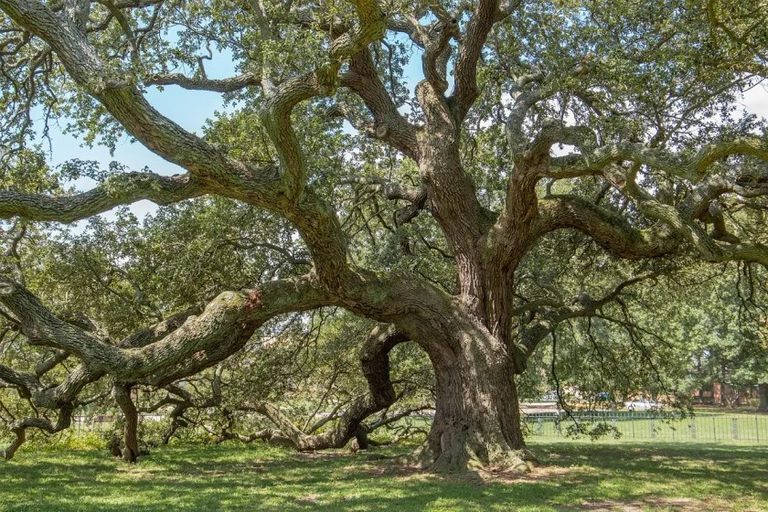
“We’ve been working on this concept for about a decade,” Langford said in a Zoom interview. “It feels like it’s precisely meeting the moment and the place of the Southeast.” The family likens the new program to a live oak tree whose roots intertwine and whose death releases a burst of nutrients that enrich the surrounding ecosystem.
Strategic Funding and Partnerships
Live Oak will be incubated within the foundation while it prepares to spin out as an independent entity. John Lanier, executive director of the Ray C. Anderson Foundation, said the plan includes providing roughly $3 million in flexible operating capital when the initiative becomes standalone.
“Instead of handing a baton off to a single funder, we intend to break that baton into a thousand pieces and distribute them,” Lanier explained. “Our goal is to bring many more funders into the space so the South can benefit from a broader base of support.”
Focus on Southern‑Led, Intersectional Climate Work
McBride, an Atlanta native who grew up in the West End, brings nearly two decades of experience in climate solutions, investment, and partnership building across philanthropy, government, nonprofits, and the private sector. She emphasized the importance of Southern‑led, intersectional approaches that connect environmental justice, racial equity, and economic opportunity.
“We have unique opportunities and assets that we can bring to the table,” McBride said. “I’m excited to use our perspective as funders, and to be honest, our privilege as funders, to talk to other funders and ensure we’re connecting those resources to community organizations and leaders who aren’t necessarily in the rooms but are already leading those solutions.”
Building on a Legacy of Environmental Philanthropy
The Live Oak Initiative joins four existing foundation programs: the Ray C. Anderson Center for Sustainable Business at Georgia Tech, the Biomimicry Institute, Drawdown Georgia, and “The Ray.” The family describes these efforts as a grove of trees they have planted, with Live Oak representing the fifth.
Langford noted, “When live oaks die, they explode all of the nutrients they have stored for a thousand years into the ecosystem. That’s the metaphor for what we hope Live Oak will do—coordinate, collaborate, seed, and move resources in a way we haven’t yet seen.”
Looking Ahead
With the foundation’s anticipated 2030 sunset, Live Oak aims to ensure that the momentum for climate action continues beyond the foundation’s lifespan. The initiative plans to convene environmental entities, fund grassroots projects, and host at least one more “Ray Day” event at Serenbe, where dozens of organizations showcase innovative environmental work.
“The South has been working hard against a lot of odds, but we’re not a deficit place,” Langford said. “There are real climate solutions and frontline communities on the ground holding those solutions. They just need a funding boost, and we think Live Oak can drive real change far beyond the life of a foundation.”
Original reporting: SaportaReport — read the source article.